Most of what a crew, a nursing unit or a security post needs to know gets used weeks or months after anyone taught it. The course is over by then. What decides whether the answer is still there is what happens in between, on ordinary shifts.
That is where knowledge retention in the workplace is won or lost. The usual fix is another session in a classroom or the LMS, and people tire of it. This article looks at the other route: short reinforcement built into the workday, run by the people who already lead the shift.
Table of Contents
- Why knowledge retention in the workplace happens on the job
- Where the workday already has room
- Short practice in hospitals and security teams
- The supervisor's part
- Keeping the load light
- Where Blank Slate fits
- Frequently Asked Questions
Why Knowledge Retention in the Workplace Happens on the Job
Training gives people the knowledge once. The job decides whether they keep it.
A meta-analysis of 89 empirical studies of training transfer (Blume et al., 2010, Journal of Management) found positive relationships between transfer and predictors such as cognitive ability, conscientiousness, motivation and a supportive work environment. Those are relationships, not proof of cause. Still, of the four, the work environment is the one a manager can change this week.
Three related questions sit next to this one, and each has its own article here:
- How fast knowledge fades in the weeks after a course ends is covered in knowledge retention after training, along with how to measure that decay window.
- What happens when experienced people retire or leave, and their know-how goes with them, is the subject of protecting organizational memory.
- Why recall from memory strengthens it for experienced adults is explained in adult learning retention.
A broader menu of knowledge retention strategies is a topic of its own. This article stays with one thing: the reinforcement that happens during the work itself.
Where the Workday Already Has Room
Most frontline jobs already have short, repeated moments when people stop and listen. Those moments are the cheapest place to reinforce what matters. The table below is our own suggestion of how to use them; none of it comes from a study.
| Moment | What to reinforce | Who leads it | Time |
|---|---|---|---|
| Shift start or huddle | One question on a high-risk task planned for today | Shift lead or charge nurse | Under a minute |
| Before a non-routine task | The one or two steps people most often miss | Supervisor on the job | A minute or two |
| After a procedure changes | The new step, asked again on later shifts | Supervisor, then short practice | A minute per shift for a few weeks |
| After a near miss | The knowledge the near miss showed was shaky | Supervisor with the team | A few minutes, once |
| Quiet periods on post or on the unit | Short practice on each person's weak items | The individual | About a minute |
Two rules make this work. Ask people to answer from memory instead of reading the answer to them. And bring the same item back on a later shift, because one mention fades like any other.
Changes deserve special care. Amy Smith, PhD, Blank Slate's Chief Scientist, notes in a post on rapidly changing workplaces that leaders commonly rely on briefings and memos to communicate updates, "but these one-off announcements are often forgotten." A briefing tells people once. Asking about the change on the next few shifts is what keeps it.
Short Practice in Hospitals and Security Teams
Short, repeated practice for working staff has been tested in hospitals and with security teams. The evidence base is small, and each study measured something different.
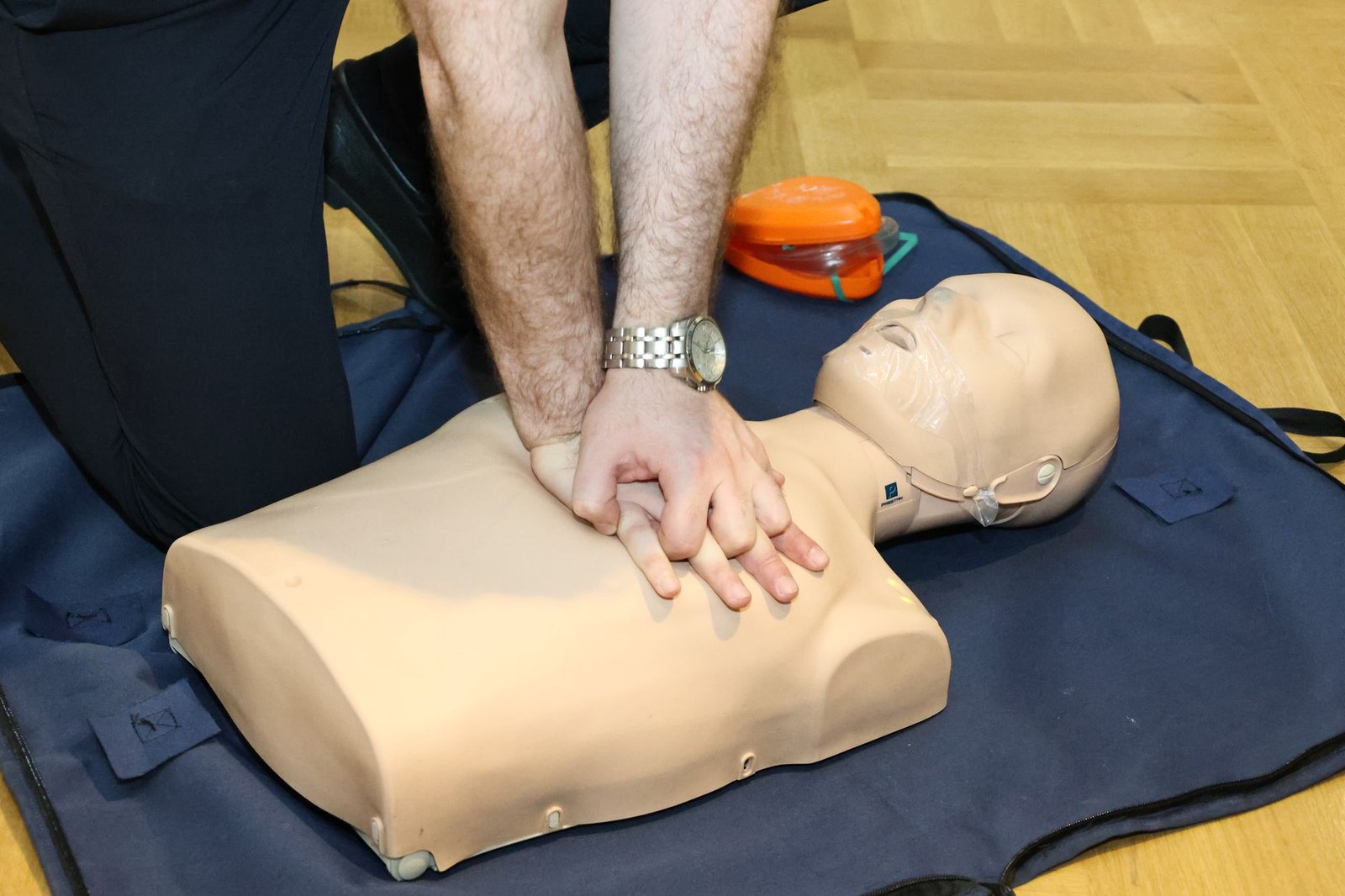
The clearest outside example comes from CPR. In a randomized trial of 89 hospital-based providers (Sutton et al., Pediatrics, 2011), those in the three training arms took short bedside sessions at the start and again at one, three and six months. Each included 120 seconds of booster training.
Providers who had more boosters were more likely to retain their CPR skills: 2.3 times after two sessions and 2.9 times after three. The authors conclude that "Brief bedside booster CPR training improves CPR skill retention." That study measured a hands-on skill, not recall of facts, but the format is the point: two minutes, at work, repeated.
Blank Slate on the Unit and on Post
Blank Slate has been tested with nursing staff on the job. In a six-week pilot on two neurology units, co-authored with Massachusetts General Hospital nurse leaders, staff used Blank Slate for 2 to 3 minutes per workday (Giumetti et al., Journal of Patient Safety, 2025). First-attempt accuracy on fall-prevention questions rose from 65.31% to 82.18%.
Confidence in preventing falls and completion of the Fall TIPS safety poster also improved. The small pilot found no change in patient falls.
Blank Slate has also been tested with security officers. In a year-long case study of 70 data-center security guards presented at MODSIM World 2025, the guards had three required sessions a week, six questions each. Those who started below the team's median went from about 56% to over 90% accuracy. In all three studies, the CPR trial included, practice came in small doses spread over weeks or months.
The Supervisor's Part
The meta-analysis above links a supportive work environment to transfer, but it does not test any specific supervisor behavior. The habits below are our suggestions for what support can look like on a shift:
- Ask, don't tell. "What's the first thing you isolate on this machine?" does more than reading the step out loud.
- Follow the miss. When someone gets an answer wrong, ask the same thing again later in the week.
- Protect the minute. Reinforcement that has to fit around overtime and short staffing will not happen unless someone schedules it.
- Recognize correct recall. Name it when a person who missed an item gets it right later.
- Stay off the scoreboard. Keep individual results private. In our view, a public list of who knows least can make people stop trying.
Supervisors also see what a course never will. They know which task is coming up, which procedure just changed and which near miss happened last night. That is why the people who run the shift are the right ones to pick what gets reinforced.
Keeping the Load Light
Reinforcement that feels like more training will be resisted. Keep each touch short, about 60 seconds. Three or four short sessions a week is a sound default, adding up to a few minutes a week. Delivery choices, from session length to cadence, are covered in our microlearning strategies article.
What to reinforce matters as much as how often:
- Start with high-consequence knowledge, the facts and decisions where a wrong answer hurts someone or fails an inspection.
- Target each person's misses. Asking an expert what they already know wastes their time.
- Retire what is known. Once someone answers an item correctly on several later occasions, ask it less often.
- Keep required training separate. On-the-job reinforcement supports required courses, refreshers and hands-on practice. It does not replace them or count toward their hours.
Where Blank Slate Fits
Blank Slate is a cognitive-readiness platform built on AI-optimized spaced retrieval. Spaced retrieval combines retrieval practice (answering from memory) with spaced repetition (bringing material back at intervals). Blank Slate works on top of the training content an organization already has, and a machine-learning model decides when each person should see each question again.
People answer in short (about 60-second) sessions three or four times a week, which fits the quiet moments in a shift. Its True Knowledge Level™ shows what a person or team knows right now, so a supervisor can see where reinforcement is needed before a gap shows up on the job.
Blank Slate coexists with the LMS, which keeps recording what people completed. It does not replace required training hours, a refresher course or hands-on practice; it reinforces and measures what people retain between them. The how it works page shows the setup. To see where your team stands today, start with a Knowledge Gap Audit.
Frequently Asked Questions
What is knowledge retention in the workplace?
It is how well employees keep and can recall what they learned, weeks and months after training, while doing the job. Courses deliver the knowledge once. Short practice and supervisor prompts during ordinary shifts are what keep it available when a task calls for it.
How much time should on-the-job reinforcement take?
Very little. Short sessions of about 60 seconds, three or four times a week, add up to a few minutes a week. In a CPR trial, two-minute bedside boosters improved skill retention, which shows how small a dose can still count.
What role do supervisors play on the shift?
They choose what gets reinforced and make time for it. Supervisors know which tasks, changes and near misses matter this week. Asking one question from memory and following up on misses later in the week are practical ways to support retention without adding a course.
Does on-shift reinforcement replace required courses?
No. Required courses, refreshers and hands-on practice still have to happen on their own schedules. Reinforcement during the shift keeps that knowledge from fading between them, and it does not count toward required training hours.
A few minutes of practice on the shift keeps knowledge ready long after the course is forgotten. A Knowledge Gap Audit is free: your team answers a short assessment in the browser, and you get a one-page readiness snapshot of what is retained, what is slipping, and where to reinforce first.