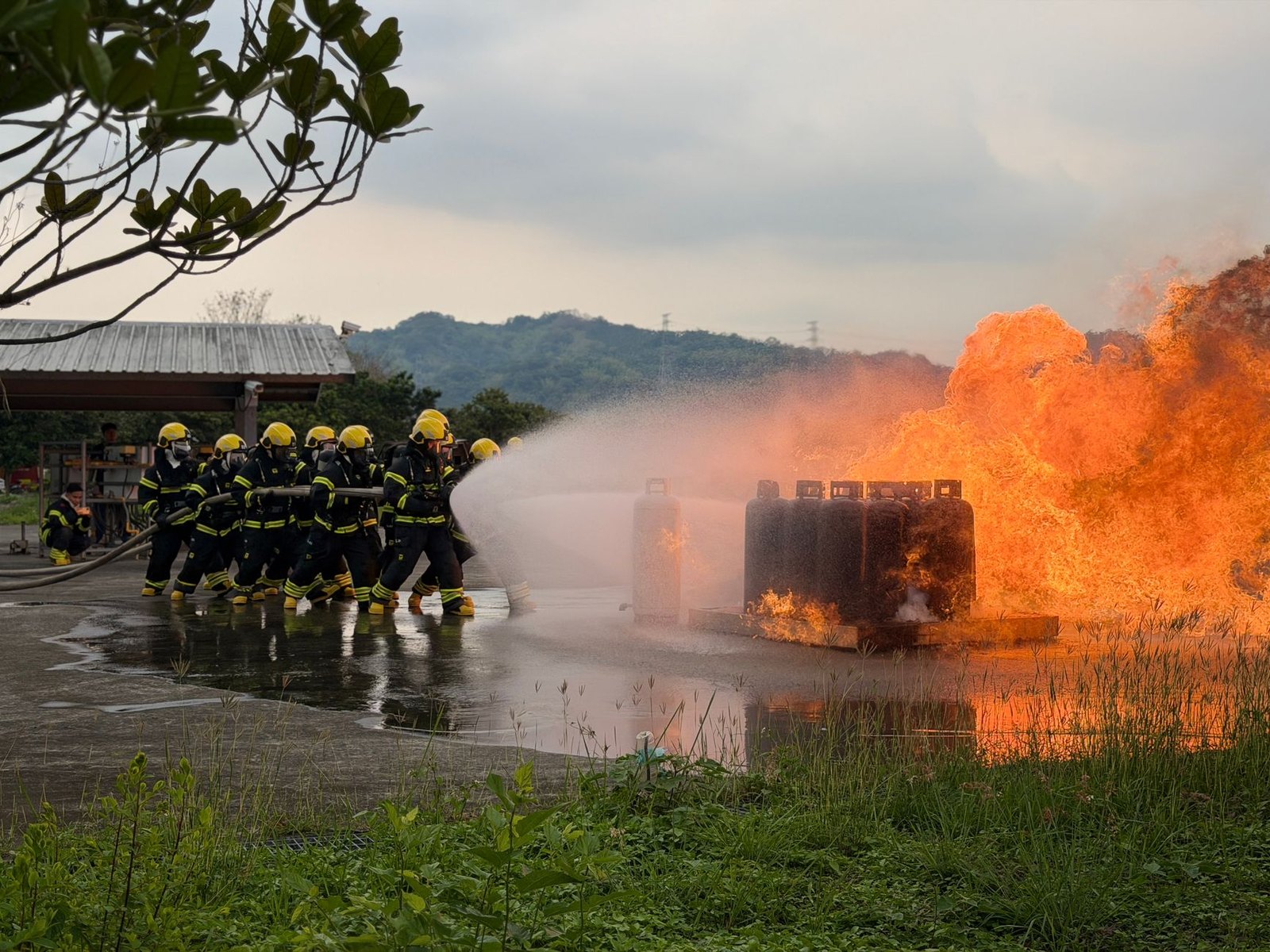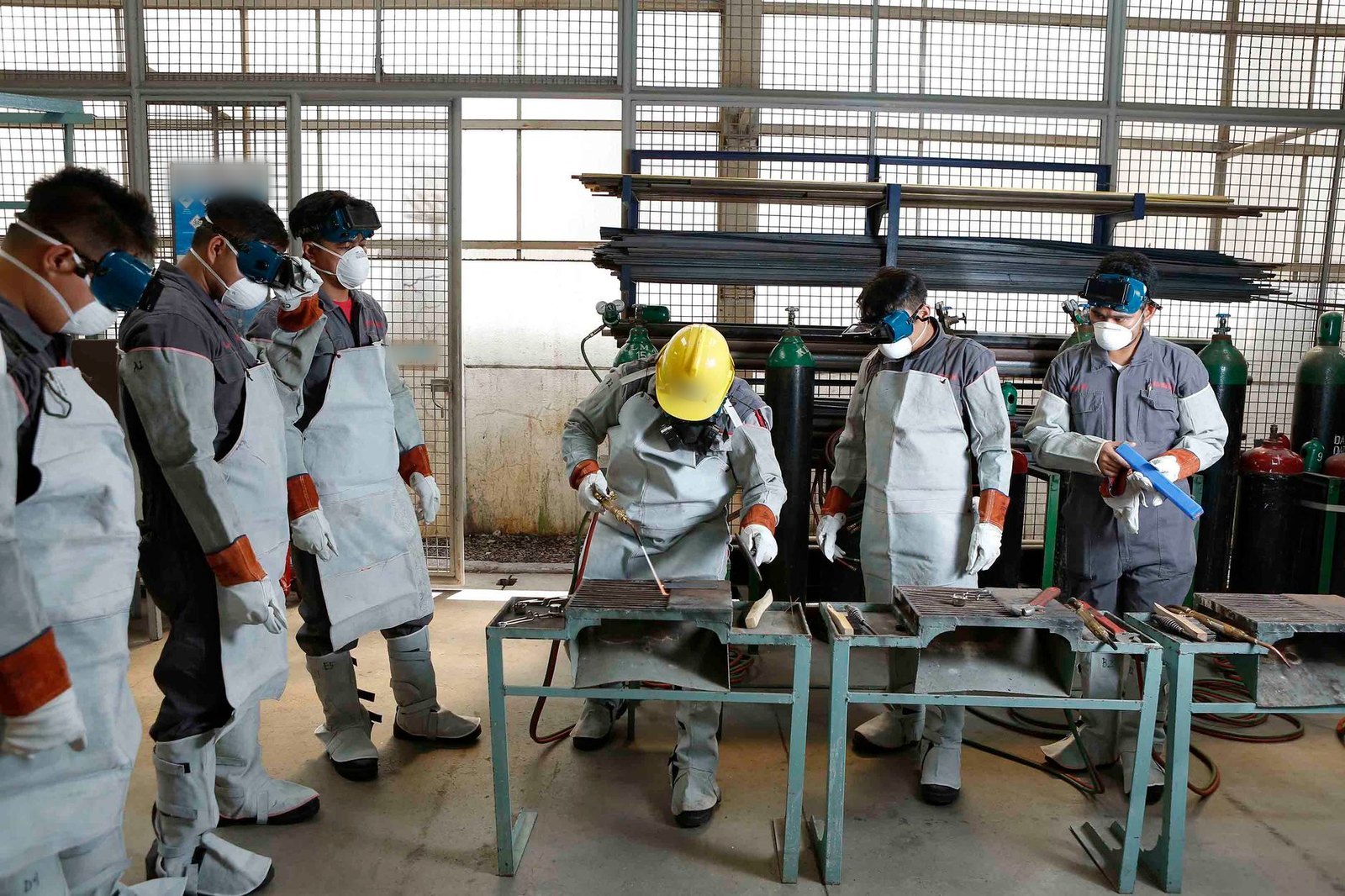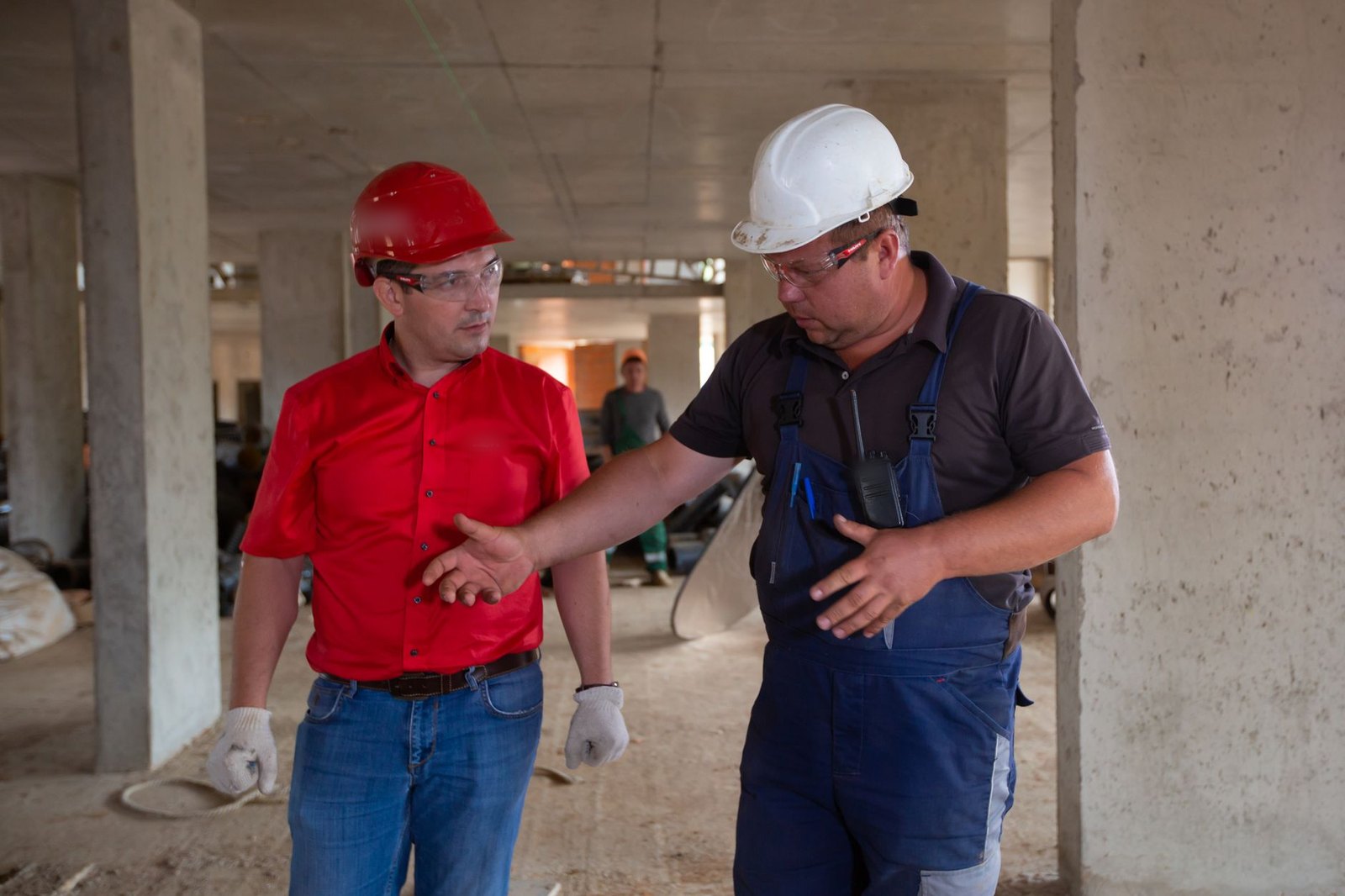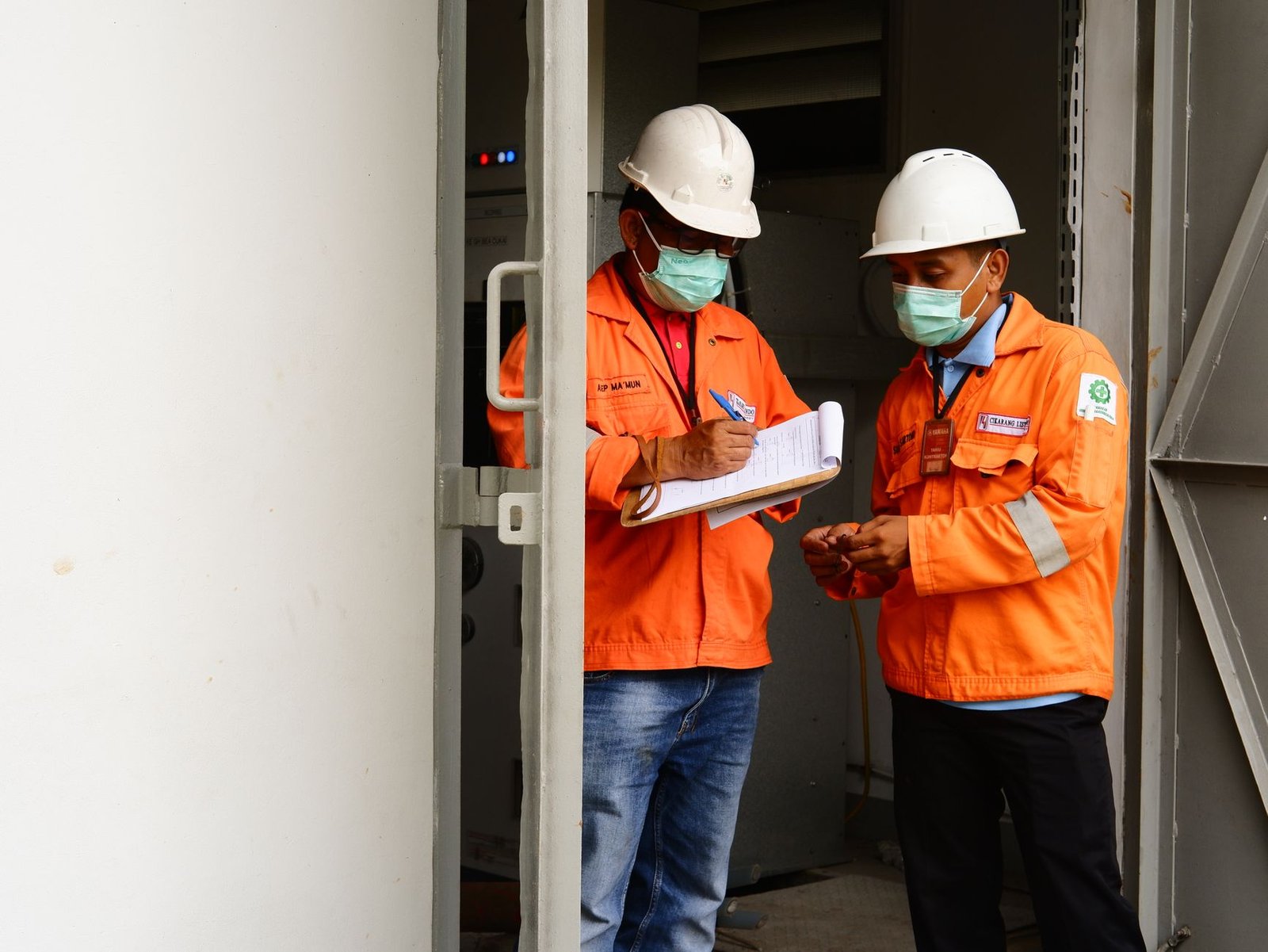
A turnaround crew arrives on Monday. By Tuesday morning, forty people who are not on your payroll have watched the site orientation, signed the roster and picked up a badge. Your external training management system now says they are trained.
What it cannot say is whether the scaffold crew remembers where the muster point is, or whether the agency temp on second shift knows which valves are off limits. Below: what OSHA asks of host and contract employers, and the questions to put to any setup that trains people outside your workforce.
Table of Contents
- What an external training management system covers
- What OSHA expects from hosts and contract employers
- Questions to ask beyond attendance records
- Why a one-time orientation fades
- Where Blank Slate fits
- Frequently Asked Questions
What an External Training Management System Covers
External training is training an organization gives to people outside its own payroll: contractors and subcontractors, temporary and agency staff, and partners who work on site. An external training management system is whatever setup assigns that training and keeps the record. In some companies it is a contractor portal. In others it is a separate area of the LMS, or a spreadsheet the gatehouse checks before issuing a badge.
Most of these setups do the same core jobs:
- Assign a site orientation or safety induction before first entry.
- Record who completed it, and when.
- Track expiry dates and flag who needs to repeat it.
- Hold copies of certificates the contract employer supplies.
Those jobs answer "who attended?" and "is it current?" They rarely answer "does this person know our rules today?"
What OSHA Expects From Hosts and Contract Employers
Two OSHA sources show how responsibility for outside workers is split, and both go further than a roster.
Contractors under process safety management
The process safety management standard, 29 CFR 1910.119, applies to processes involving a highly hazardous chemical at or above the threshold quantities in its Appendix A. It also covers 10,000 pounds or more, on site in one location, of Category 1 flammable gases or flammable liquids with a flashpoint below 100 °F. One exception is hydrocarbon fuels used only as a workplace fuel, unless they are part of a process with another highly hazardous chemical. The other is flammable liquids kept below their normal boiling point in atmospheric tanks or transfer without chilling or refrigeration.
The standard does not apply to retail facilities, oil or gas well drilling or servicing operations, or normally unoccupied remote facilities.
Its contractor paragraph, (h), covers contractors "performing maintenance or repair, turnaround, major renovation, or specialty work on or adjacent to a covered process". It does not apply to contractors providing incidental services that do not influence process safety, such as janitorial work, food and drink services, laundry, delivery or other supply services.
Under (h)(2), the host employer must:
- Obtain and evaluate information on the contract employer's safety performance and programs when selecting a contractor.
- Inform contract employers of the known potential fire, explosion or toxic release hazards related to the contractor's work and the process.
- Explain the applicable provisions of the emergency action plan to contract employers.
- Develop and implement safe work practices consistent with paragraph (f)(4) to control the entrance, presence and exit of contract employers and contract employees in covered process areas.
- Periodically evaluate the performance of contract employers in fulfilling their obligations under (h)(3).
- Maintain a contract employee injury and illness log related to the contractor's work in process areas.
Under (h)(3), the contract employer must make sure each contract employee is trained in the work practices needed to do the job safely. It must make sure each one is instructed in the known potential fire, explosion or toxic release hazards related to the job and the process, and in the applicable provisions of the emergency action plan. It must also make sure each contract employee follows the facility's safety rules, including the safe work practices required by (f)(4). It must tell the host about any unique hazards its work presents and any hazards its work finds.
The record duty is the line that matters for this article. Paragraph (h)(3)(iii) says the contract employer "shall document that each contract employee has received and understood the training required by this paragraph". The record must contain the employee's identity, the date of training, and "the means used to verify that the employee understood the training".
That duty sits with the contract employer, not the host. The host's matching duty is the periodic evaluation in (h)(2)(v).
Under PSM, a training record without a means of verifying understanding is incomplete. A sign-in sheet records attendance, not understanding.
Temporary and agency workers
OSHA's Protecting Temporary Workers page is agency guidance, not a standard. It says the extent of each party's legal responsibility depends "on the specific facts of each case". It also says staffing agencies and host employers are jointly responsible for a safe work environment, including, for example, making sure OSHA's training, hazard communication and recordkeeping requirements are met.
The page gives an example of the split: "staffing agencies might provide general safety and health training, and host employers provide specific training tailored to the particular workplace equipment/hazards". It also says host employers "must treat temporary workers like any other workers in terms of training and safety and health protections". OSHA recommends that the agency and host set out their respective responsibilities in their contract.
Questions to Ask Beyond Attendance Records
Broader buying criteria for training tools are covered in our article on compliance training solutions. The questions below are specific to people who do not work for you. Ask them of your current setup first.
| Question | Why it matters for outside workers | A weak answer |
|---|---|---|
| Whose record is it? | Under PSM, the contract employer documents training; the host evaluates performance | The host's system holds only its own orientation roster |
| Does it check site-specific rules? | General training often comes from the contractor or agency; your hazards and your emergency plan are yours | One generic induction for every site |
| How is understanding verified? | PSM records need the means used to verify it | "They signed the acknowledgment" |
| When is knowledge checked again? | Contractors may return months later for the next job | Only at badge renewal |
| Can outside workers reach it? | Outside workers may have no company email or network login | Access only from a company computer |
| Who acts on a miss? | Host and contract employer need an agreed path | Misses are logged and nobody follows up |
A few notes on reading the answers:
- Record ownership. If the contract employer keeps the verification record, ask how it verifies understanding. Your periodic evaluation is a natural place to review it.
- Site rules. A valid general certificate does not tell you a worker knows where your muster point is.
- Re-checks. In our view, a contractor who visits twice a year has long gaps in which to forget your rules. Plan a check near each return.
- Following up. Agree in the contract who closes a gap: the host re-briefs, the contract employer retrains, or both.
Tracking itself, and what auditors expect in the file, is covered in training compliance tracking. For how a readiness layer differs from the system that stores completions, see Blank Slate vs. an LMS.
Why a One-Time Orientation Fades
An orientation given once and never revisited is exposed to ordinary forgetting. Spaced retrieval combines retrieval practice (answering from memory) with spaced repetition (bringing material back at intervals), and Blank Slate is AI-optimized spaced retrieval. In a four-week randomized controlled trial with 93 university and college students (McHugh et al., 2021, Education Sciences), the group that did no review saw scores fall from 40 to 34 of 60 questions. Students on Blank Slate's spaced schedule matched the retention of a daily-review schedule in about one-third of the study time.
Blank Slate has also been tested in a training pipeline. In a study of US Air Force pararescue trainees using Blank Slate, presented at I/ITSEC 2023, accuracy on the app's questions rose from 67% to 81% over 16 weeks, with trainees averaging about 100 seconds of use a week.
Neither study involved contractors. The link to outside workers is our inference: if students with no review lose ground in four weeks, a contractor who heard your orientation last spring has had far longer to forget it.
Where Blank Slate Fits
Blank Slate is a cognitive-readiness platform, not a training management system. It sits alongside whatever system already assigns and records external training, whether that is an LMS, a contractor portal or a spreadsheet. That system keeps the record of who completed what. Blank Slate works on top of the training content you already have and checks what people still know.
Users answer questions in short (about 60-second) sessions, three or four times a week, which adds up to a few minutes a week. A machine-learning model decides when each person sees each question again. Blank Slate's True Knowledge Level™ shows what a person or team knows right now, so you can see where knowledge of your site rules is slipping before a job starts.
Blank Slate does not replace OSHA-required training, the contract employer's training records, a refresher course or hands-on practice. It reinforces and measures retention between them. The how it works page shows the setup, and the industrial safety page covers plant and site teams. To see where your own team stands first, start with a Knowledge Gap Audit.
Frequently Asked Questions
Who trains contract employees under OSHA's PSM standard?
The contract employer. Under 29 CFR 1910.119(h)(3), it makes sure each contract employee is trained in safe work practices and instructed in the known fire, explosion and toxic release hazards and the emergency action plan. It also documents that each one received and understood the training. Among its own duties, the host employer informs contract employers of known hazards, explains the emergency action plan and periodically evaluates their performance.
Who covers site-specific hazards for temporary workers?
In OSHA's example, the host employer. Its guidance says the staffing agency and host are jointly responsible, with the extent depending on the facts of each case. The example has the agency giving general safety training and the host giving training specific to its own equipment and hazards. OSHA recommends setting out each party's duties in the contract.
Is a signed orientation roster enough proof for contractors?
Not for contractors covered by PSM's paragraph (h). Paragraph (h)(3)(iii) requires the contract employer's record to include the means used to verify that the employee understood the training. A roster shows attendance. A host can also check understanding of its own site rules before and between jobs.
A badge and a signed roster say who attended. Before the next crew arrives, find out what your own team actually knows. A Knowledge Gap Audit is free: a short browser-based assessment, and you get a one-page readiness snapshot of what is retained, what is slipping, and where to reinforce first.