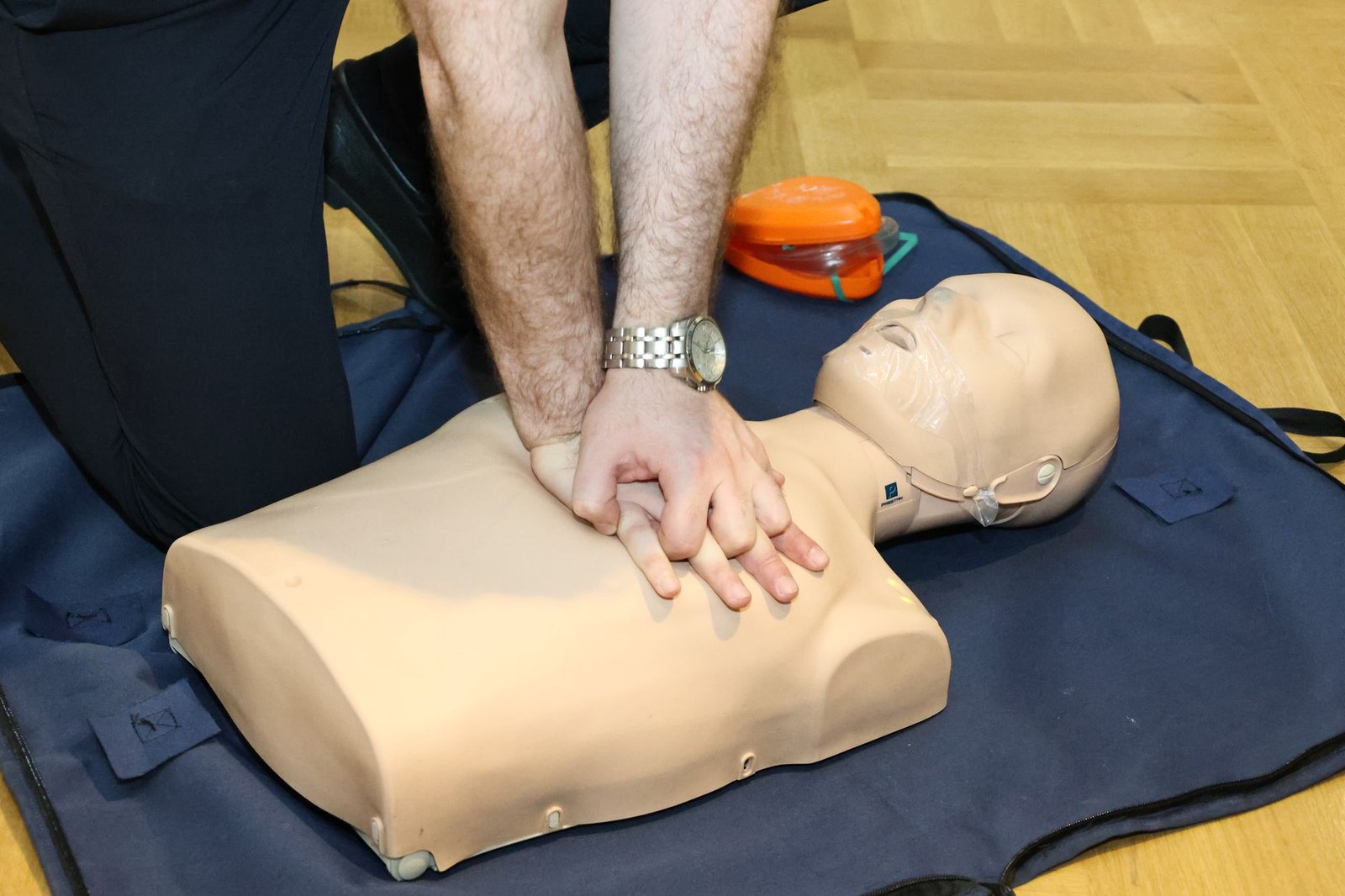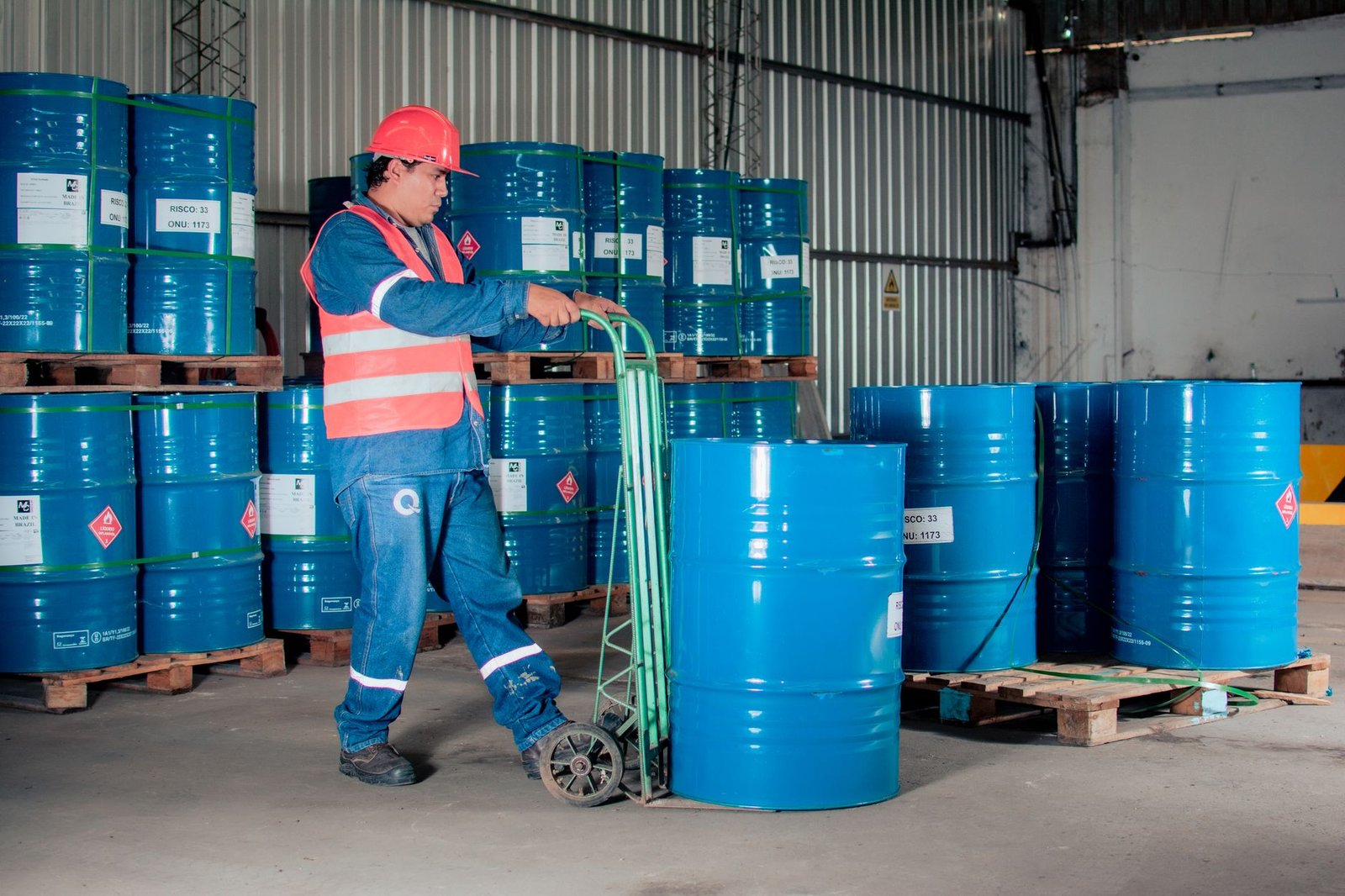
Every delivery method can produce a signed roster. The question that separates effective regulatory training delivery methods is what workers still know when the rare task comes around, months after the record was signed.
This comparison is for the EHS manager, nurse educator or training chief who has to pick the mix.
Table of Contents
- How OSHA treats the delivery format
- Effective regulatory training delivery methods, side by side
- What the evidence shows on retention by method
- How spaced reinforcement has been tested
- Choosing the mix for each requirement
- Where Blank Slate fits
- Frequently Asked Questions
How OSHA Treats the Delivery Format
OSHA standards mostly set what training must cover and when it is due. Three texts come closest to addressing how it is delivered.
The Hazard Communication Standard asks for effective training. Paragraph (h)(1) of 29 CFR 1910.1200 reads: "Employers shall provide employees with effective information and training on hazardous chemicals in their work area at the time of their initial assignment, and whenever a new chemical hazard the employees have not previously been trained about is introduced into their work area." The paragraph sets no annual interval, and it does not name a delivery method. Our HazCom training article covers the content list.
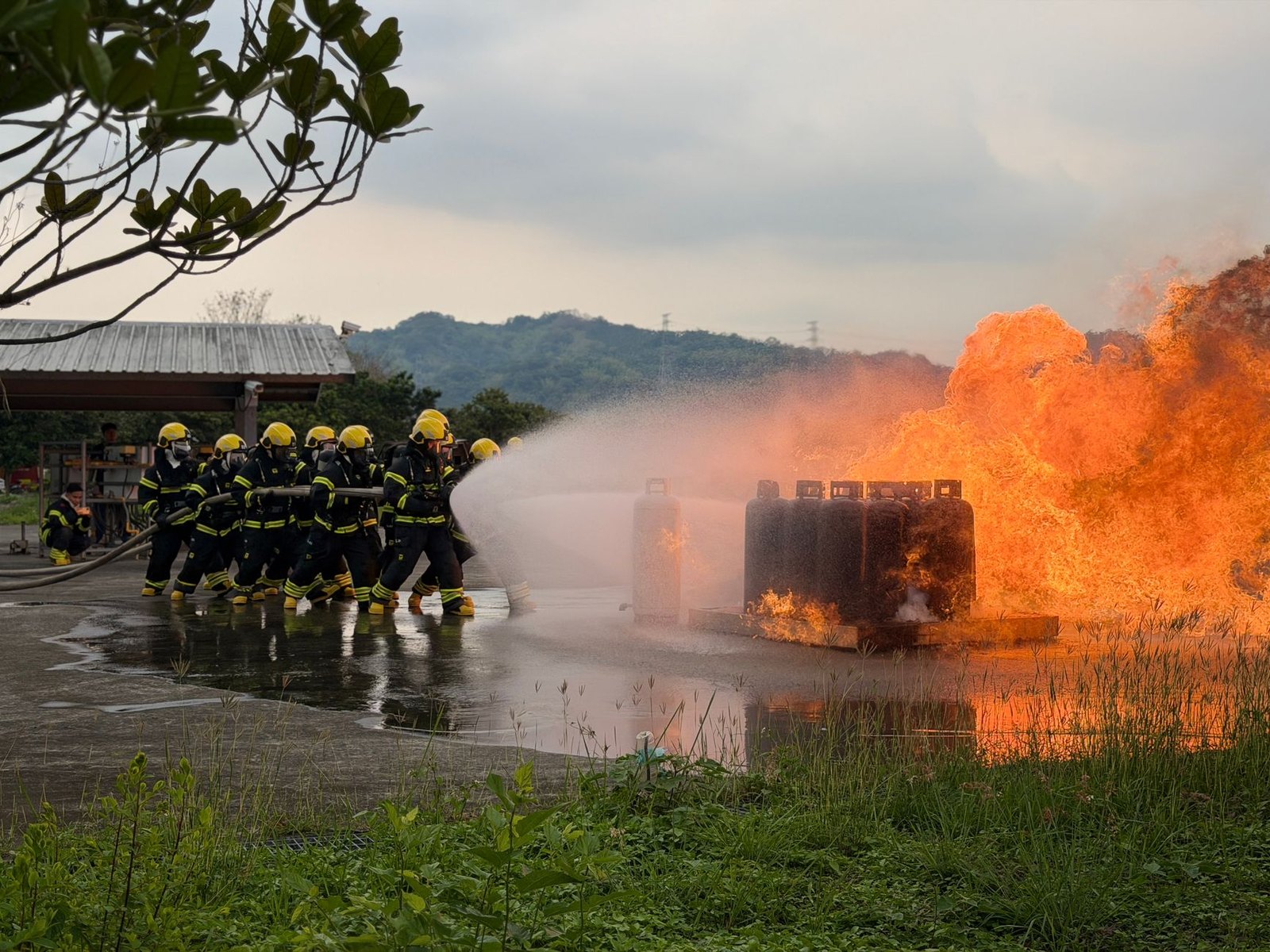
HAZWOPER pairs off-site instruction with supervised field time. 29 CFR 1910.120 covers the operations listed in (a)(1) unless the employer can demonstrate that the operation involves no employee exposure or reasonable possibility of exposure to safety or health hazards. Under (a)(2), the hazardous substance cleanup operations in (a)(1)(i) through (iii) comply with every paragraph except (p) and (q), so the training paragraph, (e), applies to them. Treatment, storage and disposal (TSD) operations comply only with (p), subject to the notes and exceptions under (a)(2)(iii), and emergency response operations not covered by (a)(1)(i) through (iv) comply only with (q); each of those paragraphs has its own training provisions.
For general site workers engaged in hazardous substance removal or other activities that expose or potentially expose them to hazardous substances and health hazards, (e)(3)(i) requires "a minimum of 40 hours of instruction off the site, and a minimum of three days actual field experience under the direct supervision of a trained, experienced supervisor." Other worker categories and supervisors have different minimums. Under (e)(9), an employer who can show by documentation or certification that an employee's work experience or training is equivalent need not provide the initial training, and gives the employee a copy on request. Those employees, when new to a site, still receive appropriate site-specific training before site entry and appropriate supervised field experience at the new site.
Our HAZWOPER training article sets out each category and its exceptions. For this comparison, the point is the format: the standard writes supervised field experience into the training itself.
OSHA has addressed computer-based training in an interpretation letter. In a 1994 letter answering a utility's questions about HAZWOPER (1910.120 and 1926.65), OSHA wrote that self-paced, interactive computer-based training "can serve as a valuable training tool" in an overall program. It also wrote that "use of computer-based training by itself would not be sufficient to meet the intent of most of OSHA's training requirements, in particular those of HAZWOPER." OSHA said such programs can be used as part of an effective safety and health training program, provided the program gives trainees the opportunity to ask questions of a qualified trainer and provides sufficient hands-on experience. It added that computer-based training does not relieve employers of their obligation to ensure that employees receive the minimum required training under HAZWOPER and other OSHA standards.
Effective Regulatory Training Delivery Methods, Side by Side
The table compares five methods. The "Retention risk" column is our reading of the evidence in the next section; the "Regulatory note" column draws on the three texts above.
| Method | Does well | Retention risk | Regulatory note |
|---|---|---|---|
| Classroom (instructor-led) | Live questions, discussion, a trainer who can check understanding | One event; nothing brings the material back afterward | Can give trainees direct access to a qualified trainer, one of the conditions in OSHA's 1994 HAZWOPER letter |
| Online or computer-based | Consistent content, self-paced, easy to record | Also one event; the Burke et al. review placed computer-based instruction in its middle engagement group | 1994 letter: by itself not sufficient for most OSHA training requirements, in particular HAZWOPER; acceptable with trainer access and sufficient hands-on experience |
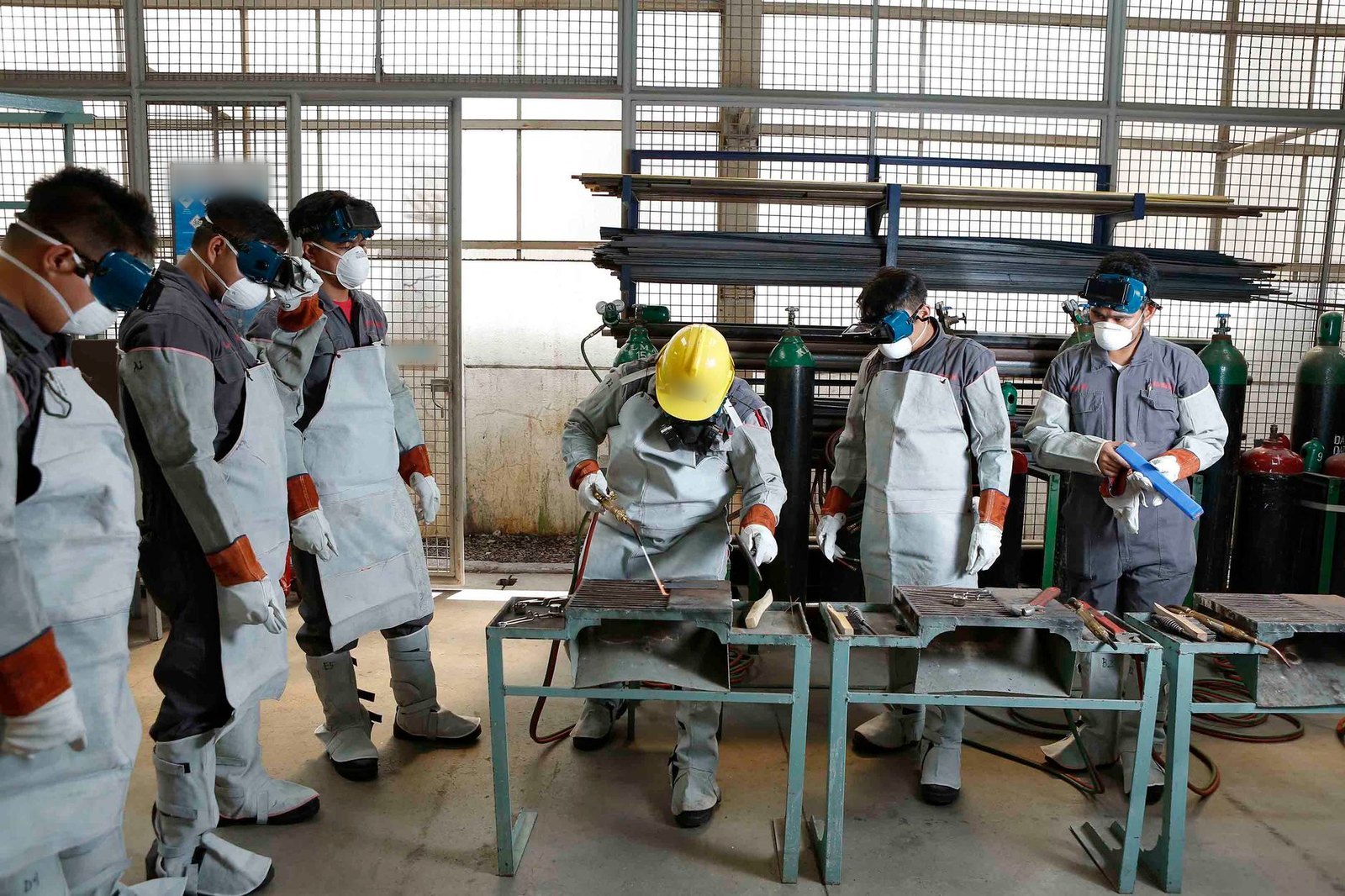
| On-the-job (supervised practice) | Practice on the real equipment, at the real site | Covers the tasks that come up; rare procedures may never be practiced | 1910.120(e)(3) sets days of field experience under the direct supervision of a trained, experienced supervisor |
| Blended | Explanation, practice and questions in one program | Still front-loaded unless follow-up is planned | Our reading: the format most likely to meet the 1994 letter's conditions, if it includes trainer access and hands-on practice |
| Spaced reinforcement between sessions | Brings material back at intervals and shows what is slipping | Does not build hands-on skill | Not a substitute for required training hours, refreshers or hands-on practice |
The first four rows are ways to deliver the training. The fifth is what happens after it. In our view, that difference matters more for retention than the choice among the first four.
What the Evidence Shows on Retention by Method
One large comparison in safety and health training is a meta-analysis of 95 studies with 20,991 participants in the American Journal of Public Health (Burke et al., 2006). It grouped methods by how much they asked of trainees:
- Least engaging: lectures, pamphlets, videos and written materials
- Moderately engaging: programmed instruction, including computer-based instruction, and feedback techniques
- Most engaging: behavioral modeling, simulation and hands-on training
In the abstract's words, "As training methods became more engaging (i.e., requiring trainees' active participation), workers demonstrated greater knowledge acquisition, and reductions were seen in accidents, illnesses, and injuries." The authors also wrote that "All methods of training produced meaningful behavioral performance improvements."
That evidence says little about what lasts. Only 7 of the 95 studies included knowledge measures that let the authors examine maintenance or decay. In the five low-engagement studies among them, "the average effect decreased approximately 50% (i.e., from 0.55 to 0.28)." The one highly engaging study held its effect over four weeks.
The authors said more research and better reporting of primary study results are needed "before definitive conclusions can be reached about decay of safety and health training effectiveness over time."
Studies of spacing look at the other half of the problem: when material comes back. A 2006 meta-analysis in Psychological Bulletin (Cepeda et al.) pooled 839 assessments of distributed practice from 317 experiments on verbal recall. Its analyses suggest that the gap between study sessions that produces the best retention grows as the time until the final test grows. Those were memory experiments, not workplaces, and they do not set a schedule for any one procedure.
How Spaced Reinforcement Has Been Tested
Spaced retrieval combines two techniques: spaced repetition (bringing material back at intervals) and retrieval practice (answering from memory instead of rereading). Blank Slate is AI-optimized spaced retrieval, and its studies have tested it with students and trainees.
In a proof-of-concept study published in Teaching of Psychology (Gordon, Hughes & Smith, 2025), 28 college students used Blank Slate for two topics, and only one of them also had a lecture. On the final applied test, the authors found "no significant difference in participants' performance for questions on lectured (M = 0.70, SD = 0.25) versus nonlectured content (M = 0.69, SD = 0.24)." The app-only topic took about 36 minutes in total, against a 50-minute lecture.
A randomized controlled trial with 93 university and college students (McHugh et al., 2021, Education Sciences) measured something different: scores on a 60-question test before and after four weeks. The control group did no review, and its scores fell from 40 to 34 of 60. Students on Blank Slate's spaced schedule matched the retention of a daily-review schedule in about one-third of the study time.
The trainee evidence comes from a different measure again. In a study of US Air Force pararescue trainees using Blank Slate, presented at I/ITSEC 2023, accuracy on the app's questions rose from 67% to 81% over 16 weeks, with trainees averaging about 100 seconds of use a week.
None of these studies compared classroom, online and on-the-job delivery for a regulatory course. They tested spaced retrieval itself: against a lecture, against daily review and no review, and across a 16-week training pipeline.
Choosing the Mix for Each Requirement
The steps below are our suggestions, not a regulatory method.
- Start from the standard's own text. Note any hours, field experience, refresher interval or competency language before picking a format. HAZWOPER's supervised field days decide part of the mix for you.
- Put hands-on practice where the standard or the task needs it. If online modules carry the theory, follow OSHA's 1994 letter: a qualified trainer who can answer questions, and sufficient hands-on experience.
- Plan the months after the session. List the procedures people use rarely and schedule them to come back.
- Check what people know, not only who attended. A short knowledge check between sessions tells you which topic to revisit first.
Program design (owners, audits, policy) belongs to compliance training best practices; the first weeks on the job, to new employee compliance training; and making sessions more engaging, to interactive training.
Where Blank Slate Fits
Blank Slate is a cognitive-readiness platform that sits alongside your LMS. It works on top of the training content you already have.
Users answer questions in short (about 60-second) sessions, three or four times a week, which adds up to a few minutes a week. The True Knowledge Level™ metric shows what a person or team knows right now, so a training lead can see which topic is slipping before the next scheduled session.
It does not replace OSHA-required training hours, a refresher course or hands-on practice; it reinforces and measures retention between them. To see where your team stands before choosing a mix, start with a Knowledge Gap Audit.
Frequently Asked Questions
Does OSHA accept online modules?
In a 1994 interpretation letter on HAZWOPER, OSHA said computer-based training can be part of an effective program if trainees can ask questions of a qualified trainer and get sufficient hands-on experience. By itself, the letter said, it would not meet the intent of most OSHA training requirements, in particular HAZWOPER's.
Which delivery method do workers retain best?
No single study settles it. The Burke et al. (2006) review found greater knowledge acquisition as methods became more engaging, but only 7 of its 95 studies allowed an examination of decay. Our suggestion: whatever the method, plan spaced review over the following months.
How often must regulatory courses be repeated?
It depends on the standard. HazCom 1910.1200(h)(1) requires training at initial assignment and whenever a new chemical hazard the employees have not been trained about is introduced, with no annual interval. HAZWOPER 1910.120(e)(8) requires eight hours of refresher training annually for the employees, managers and supervisors it names; TSD and emergency response work have their own rules in (p) and (q).
Whichever delivery method you choose, the roster will not tell you what stayed. A Knowledge Gap Audit is free: a short browser-based assessment, and you get a one-page readiness snapshot of what is retained, what is slipping, and where to reinforce first.