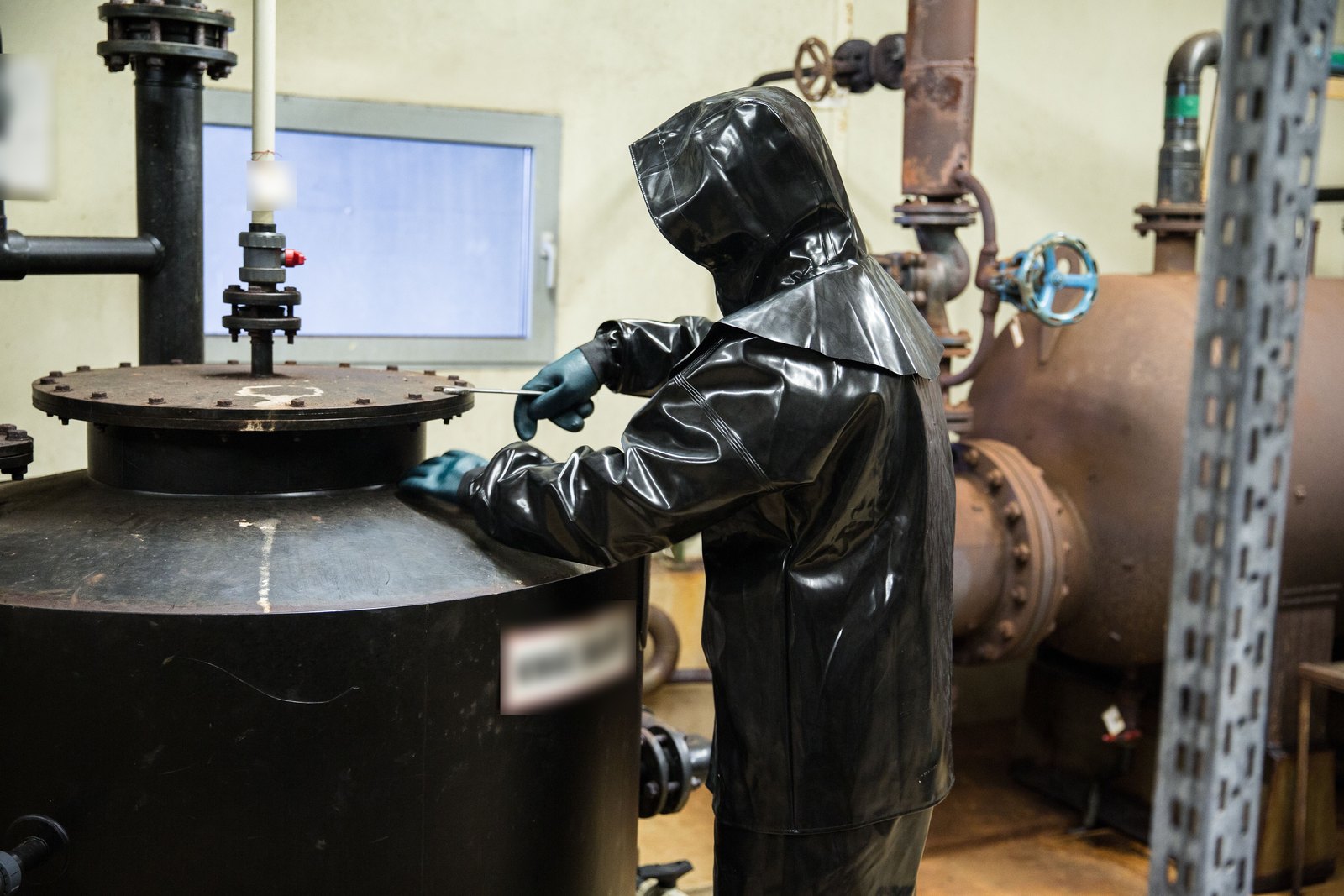
The HAZWOPER refresher takes one working day a year. The other 364 days decide whether a crew is ready, and no completion record shows them.
For EHS leaders, the HAZWOPER refresher raises practical questions: who owes it, what it covers, and what to do when one runs late. OSHA answers most of them in 29 CFR 1910.120 and a few interpretation letters. The initial 24-hour, 40-hour and supervisor levels are set out in HAZWOPER training.
Table of Contents
- Who needs the HAZWOPER refresher
- What the 8-hour HAZWOPER refresher must cover
- The HAZWOPER supervisor refresher
- Equivalent credit and workers new to a site
- When a HAZWOPER refresher is late
- What crews forget across the 12-month gap
- What this means for EHS leaders
- Frequently Asked Questions
Who Needs the HAZWOPER Refresher
Section 1910.120(a)(1) covers five kinds of operations, unless the employer can demonstrate that the operation involves no employee exposure, or reasonable possibility of exposure, to safety or health hazards.
Paragraph (a)(2) then sorts those operations into tracks. Cleanup operations under (a)(1)(i) through (iii) follow every paragraph except (p) and (q). Treatment, storage and disposal (TSD) facilities follow only (p). Emergency response not covered by (a)(1)(i) through (iv) follows only (q).
The notes to (a)(2)(iii) narrow the TSD track. Generators exempt from a RCRA permit or interim status (conditionally exempt small quantity generators and generators qualifying under 40 CFR 262.34, the "excepted employers") are not covered by (p)(1) through (p)(7), which hold the TSD refresher. If they direct employees to engage in emergency response, or EPA or a state agency requires it, (p)(8) covers them. Emergency response in an area used primarily for TSD follows (p)(8); elsewhere it follows (q), and compliance with (q) is deemed compliance with (p)(8).
| Operation | Who is covered | Annual requirement | Section |
|---|---|---|---|
| Cleanup operations, (a)(1)(i)-(iii) | Employees specified in (e)(1), plus managers and supervisors specified in (e)(4) | Eight hours of refresher training | 1910.120(e)(8) |
| TSD facilities, (a)(1)(iv), other than excepted employers | Employees exposed to health hazards or hazardous substances at TSD operations | Eight hours of refresher training | 1910.120(p)(7)(i)-(ii) |
| TSD emergency response | Employees trained for emergency response under (p)(8)(iii) | Employer certifies the training was completed, or certifies competency at least yearly; the employer records and maintains the method used to demonstrate competency | 1910.120(p)(8)(iii)(C) |
| Other emergency response | Responders trained under (q)(6) | Annual refresher training, or a demonstration of competency at least yearly | 1910.120(q)(8)(i) |
Paragraph (e)(1) reaches all employees working on site who are exposed to hazardous substances, health hazards or safety hazards, plus their supervisors and the management responsible for the site. Under (a)(2)(i), all Part 1910 and 1926 requirements still apply on their own terms, and in a conflict or overlap the provision more protective of employee safety and health applies.
Emergency responders: refresher or yearly competency
Paragraph (q)(8)(i) allows two routes. Responders trained under (q)(6) receive annual refresher training "of sufficient content and duration to maintain their competencies" or demonstrate competency in those areas at least yearly. No hour figure is set.
Under (q)(8)(ii), a statement is made of the training or competency; if it is a statement of competency, the employer keeps a record of the methodology used. How that evidence holds up with regulators is covered in EHS compliance.
What the 8-Hour HAZWOPER Refresher Must Cover
For cleanup sites, (e)(8) names three things the eight hours cover. They are the items in (e)(2) and/or (e)(4), any critique of incidents from the past year that can serve as training examples of related work, and other relevant topics.
The (e)(2) items are:
- Names of the people, and their alternates, responsible for site safety and health
- Safety, health and other hazards present on the site
- Use of personal protective equipment
- Work practices by which the employee can minimize risks from hazards
- Safe use of engineering controls and equipment on the site
- Medical surveillance requirements, including recognizing symptoms and signs that might indicate overexposure to hazards
- The contents of items (G) through (J) of the site safety and health plan in (b)(4)(ii)
Who designs the eight hours
In a 1998 letter on refresher training and documentation, OSHA said "the employer (not the outside trainer) has the ultimate responsibility" for making sure refresher training meets the requirements and for deciding how to meet the employer-specific information (e)(8) requires. Among the options it describes:
- Supplement a commercial course with a later site-specific session, so long as all portions are completed before the employee's training anniversary date.
- Use on-site health and safety briefings held through the year. The accumulated hours may count toward the 8-hour requirement, provided the information covered meets 1910.120(e)(8).
Splitting the refresher
A July 21, 1992 letter went to Radian Corporation, which ran its 8-hour refresher in segments through the year. It says "OSHA agrees that companies can conduct their refresher training in segments to meet the requirements of the standard" as long as all the refresher provisions of (e), (p) or (q) are met. Radian employees might complete initial training in January but not complete the refresher until December of the next year; OSHA said the time frame of that first set of sessions may not meet the standard. Segmented sessions "should start soon after the initial training and add up to eight hours by the first anniversary date."
The same letter calls eight hours a minimum: the competencies covered may demand more, and employers must structure the refresher around the employee's expected job duties.
The HAZWOPER Supervisor Refresher
Paragraph (e)(8) also covers the managers and supervisors specified in (e)(4): on-site management and supervisors directly responsible for, or who supervise employees engaged in, hazardous waste operations. Their eight hours cover the same (e)(8) items.
In a July 27, 1992 letter, the corporate training manager of Engineering-Science, Inc. asked whether completing the 8-hour management and supervisory training could also satisfy the employee's 8-hour annual refresher.
OSHA answered that it would expect a general hazardous waste site worker who is becoming a supervisor or manager to receive "at least 16 hours of training during the year they become a supervisor": eight hours of management and supervisory training plus eight hours of employee refresher training.
Equivalent Credit and Workers New to a Site
Under (e)(9), employers who can show by documentation or certification that an employee's work experience and/or training is equivalent to (e)(1) through (e)(4) do not have to provide the initial training again; they provide a copy of the certification or documentation to the employee on request.
Two conditions stay attached: certified or equivalently trained employees new to a site still receive appropriate, site-specific training before site entry, and appropriate supervised field experience at the new site.
Equivalence under (e)(9) speaks to the initial training; the annual refresher sits in (e)(8), which applies to the employees specified in (e)(1) and the managers and supervisors in (e)(4). At TSD facilities, (p)(7)(ii) likewise accepts equivalent initial training, then states that current employees receive eight hours of refresher training annually.
When a HAZWOPER Refresher Is Late
OSHA's clearest statement on a late refresher is the same 1998 letter, which interprets the HAZWOPER refresher provisions at 1910.120(e)(8) and 1926.65(e)(8). A corporate health and safety director had asked about using outside commercial trainers for the refresher and what documentation OSHA requires. OSHA said the employer should document successful completion in the employee's file, in a form the employer chooses, and the documentation must include the date or dates of completion. On timing:
"If the refresher training does not take place by the anniversary date of the employee's initial training, there should be a record in the employee's file indicating why the training has been delayed and when the training will be completed."
It adds that "OSHA does not rely solely on this documentation in assessing compliance with the standard." Compliance officers apply professional judgment and use employee and employer interviews and observation of work practices to determine whether employers have met the standard's intent: that workers have the knowledge and skills to perform their assigned duties without danger to themselves or others.
What Crews Forget Across the 12-Month Gap
That interview-and-observation test is what matters between refreshers. The refresher date proves training happened; an interview or an observed task can come on any day, including day 300. Across a 12-month gap, our view is that the rarely used items slip first: the alternate who takes over site safety duties, controls on equipment run twice a year, and last year's incident critique.
Spaced retrieval combines spaced repetition (reviewing material over time) with retrieval practice (pulling an answer from memory instead of rereading it). Blank Slate delivers AI-optimized spaced retrieval in short (about 60-second) sessions, three or four times a week, adding up to a few minutes a week, on top of the training content you already have.
In a 16-month Air Force study, described in a conference paper prepared for I/ITSEC 2026, fully qualified F-16 and C-17 pilots averaged 66.91% accuracy the first time they answered operational knowledge questions. That is a snapshot of what qualified professionals knew, not a measure of forgetting. With brief Blank Slate sessions (a median of about three minutes each), final average accuracy for the 37 pilots analyzed rose to 81.36%, a 21.6% relative improvement (Smith & Randolph, I/ITSEC 2026).
In a randomized controlled trial with college students, Blank Slate's spaced retrieval matched daily review's retention in about one-third of the study time (McHugh et al., 2021). Between refreshers, Blank Slate's True Knowledge Level™ shows what a person or team knows now.
What this does not replace
Blank Slate does not replace the eight hours, the (q)(8) refresher or competency demonstration, or site-specific training. It reinforces and measures retention between them, and it coexists with the LMS that holds your refresher records (see the difference from an LMS).
What This Means for EHS Leaders
OSHA's letters measure the refresher from each employee's initial training date, so the calendar is per person. Track every anniversary, and decide in advance who writes the delay record if one slips.
The bigger decision is where the next eight hours go. Paragraph (e)(8) leaves room for other relevant topics, the 1998 letter allows site-specific sessions, and knowing which (e)(2) items people are shaky on tells you where to spend those hours. A Knowledge Gap Audit before the next anniversary gives you that starting point. See how Blank Slate supports industrial safety teams.
Frequently Asked Questions
How often is HAZWOPER refresher training required?
Every year. Under 1910.120(e)(8), site workers, managers and supervisors receive eight hours annually, and (p)(7) sets the same for covered TSD employees. Emergency responders trained under (q)(6) receive annual refresher training or demonstrate competency at least yearly, under (q)(8).
Can the 8-hour HAZWOPER refresher be split into shorter sessions?
Yes. In a 1992 letter, OSHA agreed refresher training can run in segments as long as all the refresher provisions of (e), (p) or (q) are met; sessions should start soon after initial training and add up to eight hours by the first anniversary date. A 1998 letter adds that briefing hours may count if the content meets (e)(8).
Do a new supervisor's eight specialized hours count as the refresher?
Not in OSHA's reading for the year of promotion. In a 1992 letter, OSHA said it would expect a general site worker becoming a supervisor or manager to receive at least 16 hours of training that year. That is eight of management and supervisory training plus eight of employee refresher training.
Your crews will sit the refresher on schedule. What matters is what they hold in the months before it. A Knowledge Gap Audit gives you a one-page readiness snapshot within days: what's retained, what's slipping, and where to reinforce first.