The Bottom Line Up Front
In time-constrained and rapidly evolving workplaces, people can struggle to keep pace with shifting policies and procedures. Blank Slate is purpose-built to support continuous adaptation, keeping teams up to speed without slowing them down.
The Details
In most workplaces, information changes faster than people can keep up. Leaders commonly rely on briefings and memos to communicate important updates, but these one-off announcements are often forgotten. And when safety and performance depend on recalling these recent communications, that’s a serious problem.
Blank Slate exists to ensure knowledge stays current in dynamic information spaces. When our clients have new information to distribute to their teams, here’s what the process and results look like.
Step 1: Update Blank Slate Content
When small changes to existing SOPs are needed, administrators can edit their Blank Slate content and make those changes live immediately. This typically takes 1–2 minutes.
When broader changes are needed, old content can be deleted and new content uploaded with a few clicks. If the new content is already prepped for upload, this process takes 1–2 minutes. If new content needs to be generated using Blank Slate’s AI tool, budget 5 more minutes.
When employees need to see new information immediately, turning on Blank Slate’s prioritization feature will automatically move new or revised content to the front of each user’s queue. This happens with the click of a button. Managers can also send a custom push notification to alert their team about the urgency of the new changes.
Step 2: Keep Knowledge Up to Date
Once updates go live, Blank Slate’s adaptive AI gets to work. Short, personalized sessions pinpoint each person’s weak spots and strengthen memory through active recall, akin to mental strength training. Instead of relying on what people can remember from a memo, employees build lasting mastery that holds up under pressure. This step takes team members about 60–90 seconds per Blank Slate session, a few times each week. The result: Every employee gets up to speed on critical updates quickly, without waiting for the next training cycle or relying on vague memories of a briefing or email.
Step 3: Watch the Knowledge Gains in Real Time
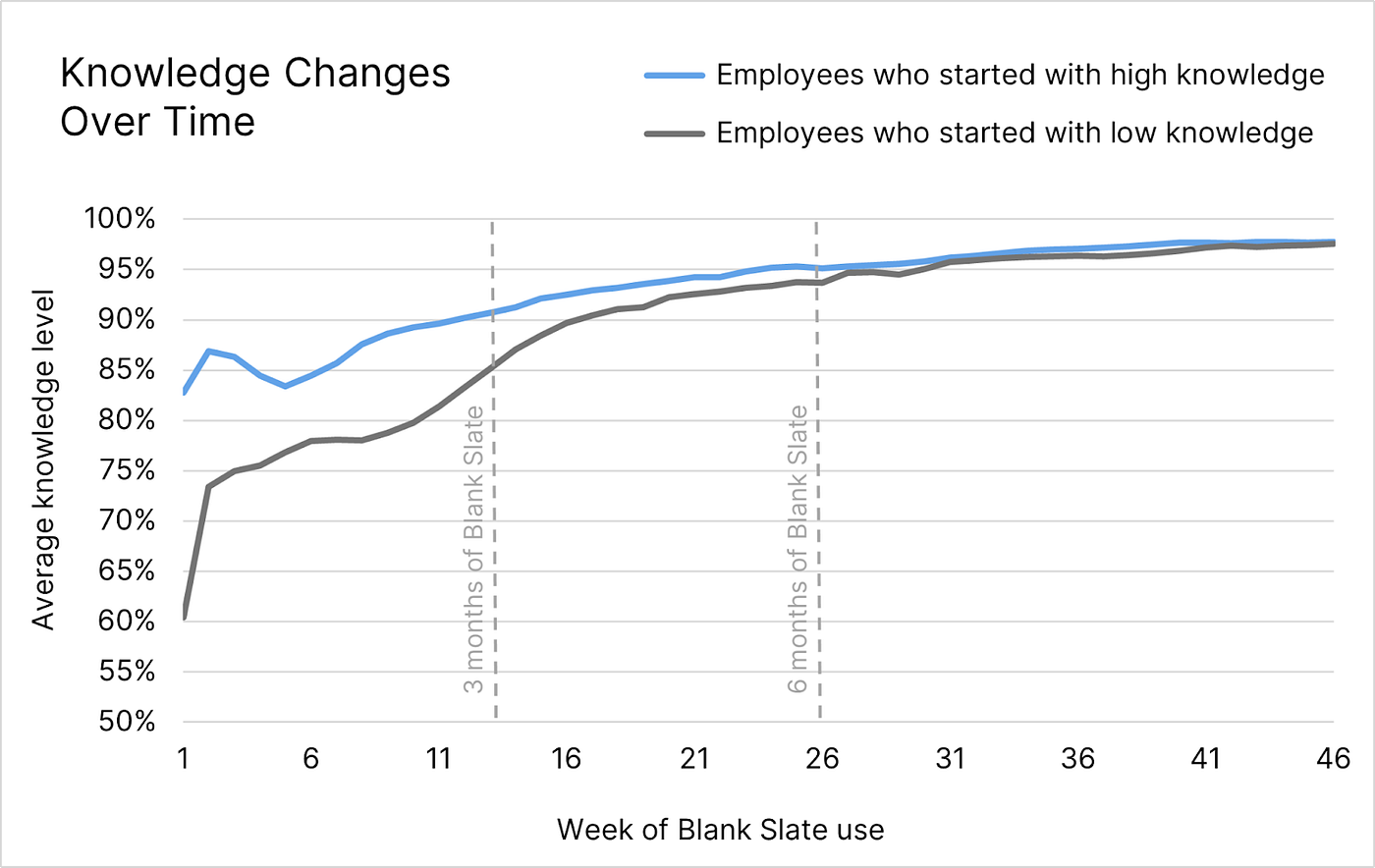
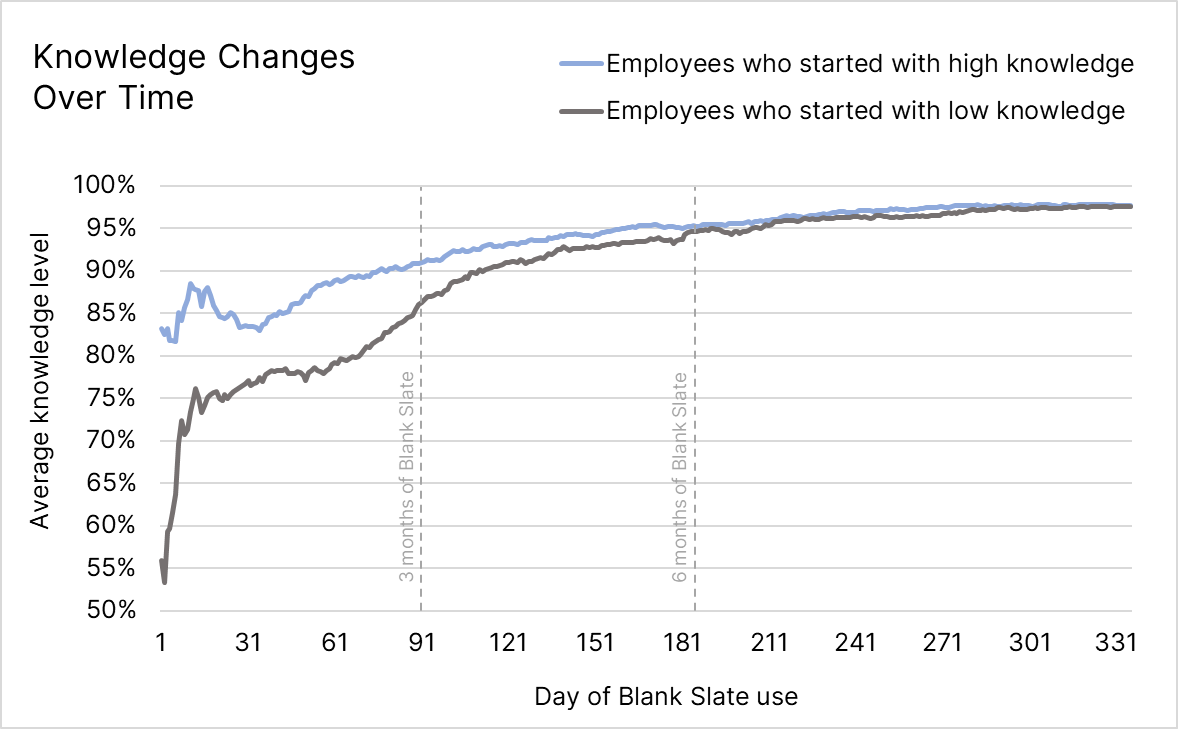
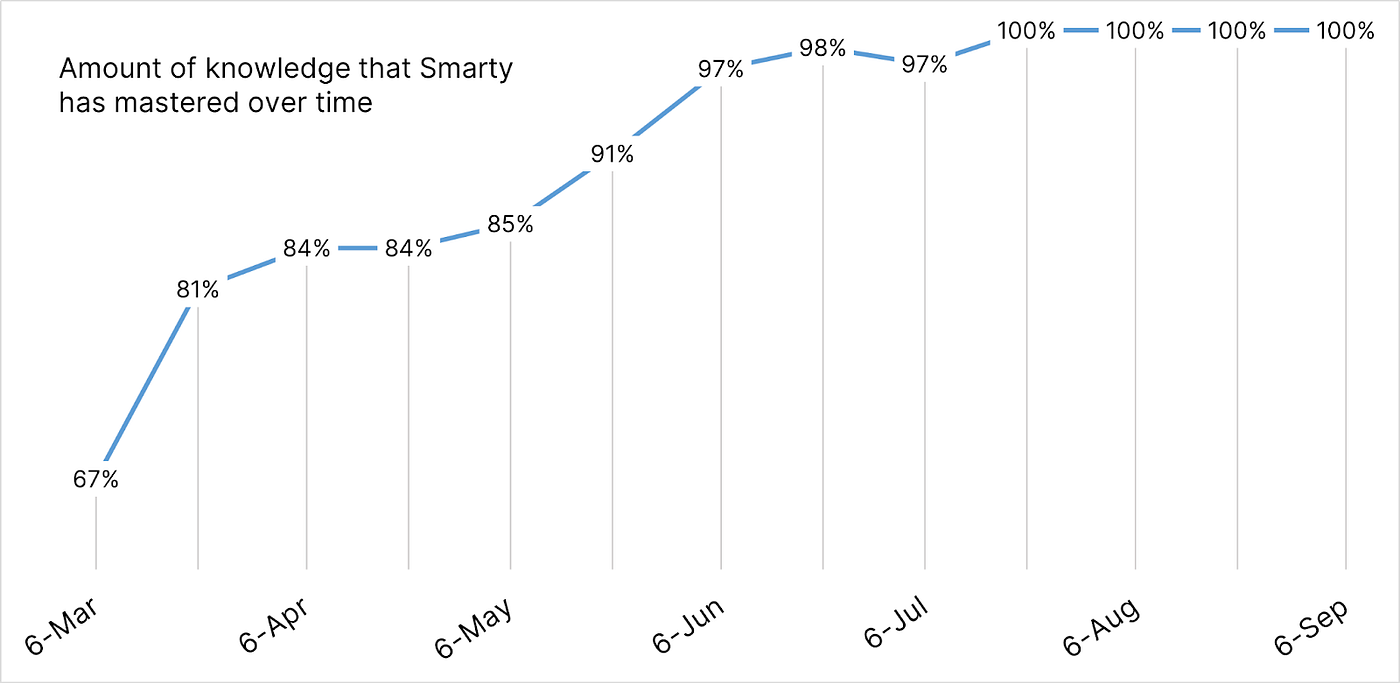
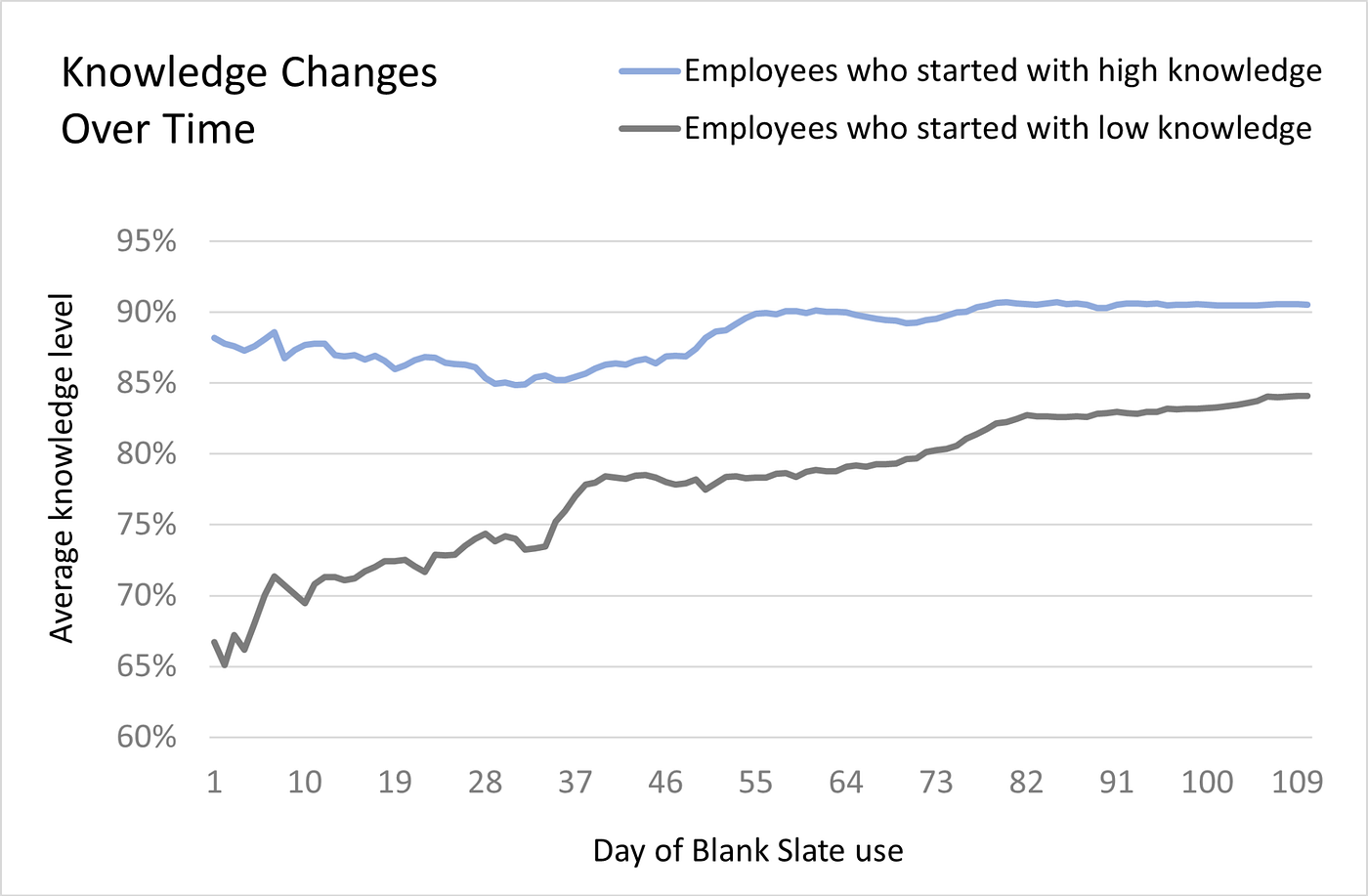
Within a week of launching updated SOPs in Blank Slate, a workforce will have already adapted. The graph below shows Dartmouth medical students’ performance when new material was introduced mid-semester. Notice the brief dip, followed by a rapid rebound? That’s Blank Slate’s adaptive reinforcement at work, helping users absorb changes fast and retain them long-term.
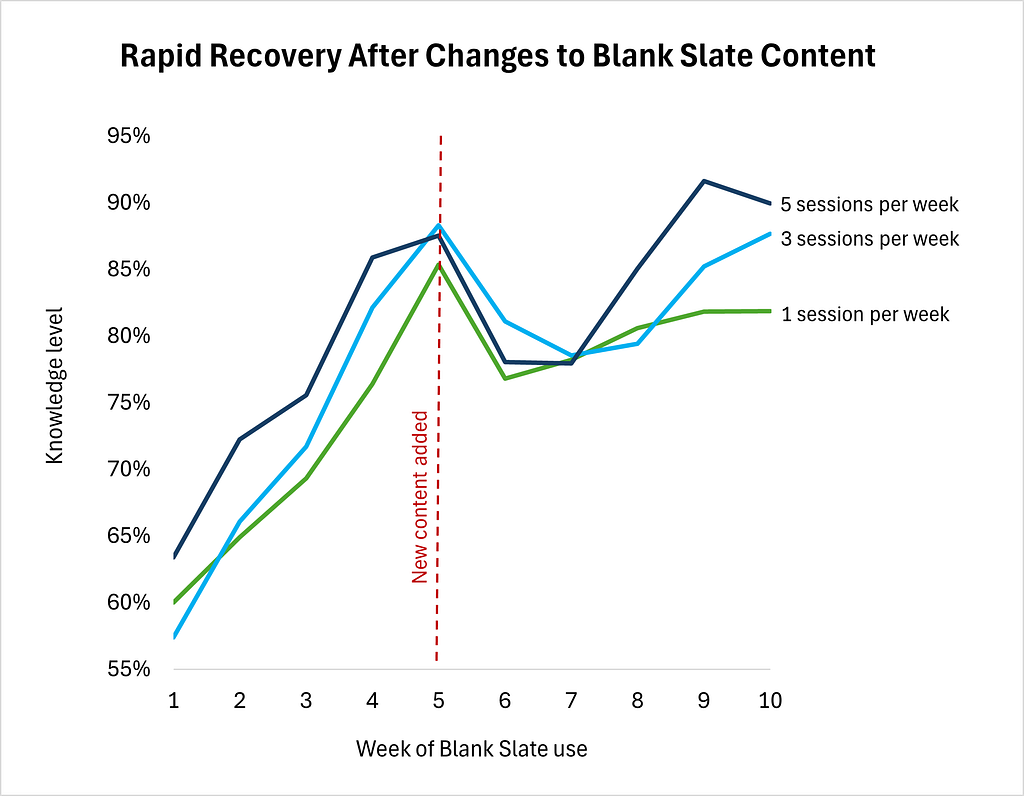
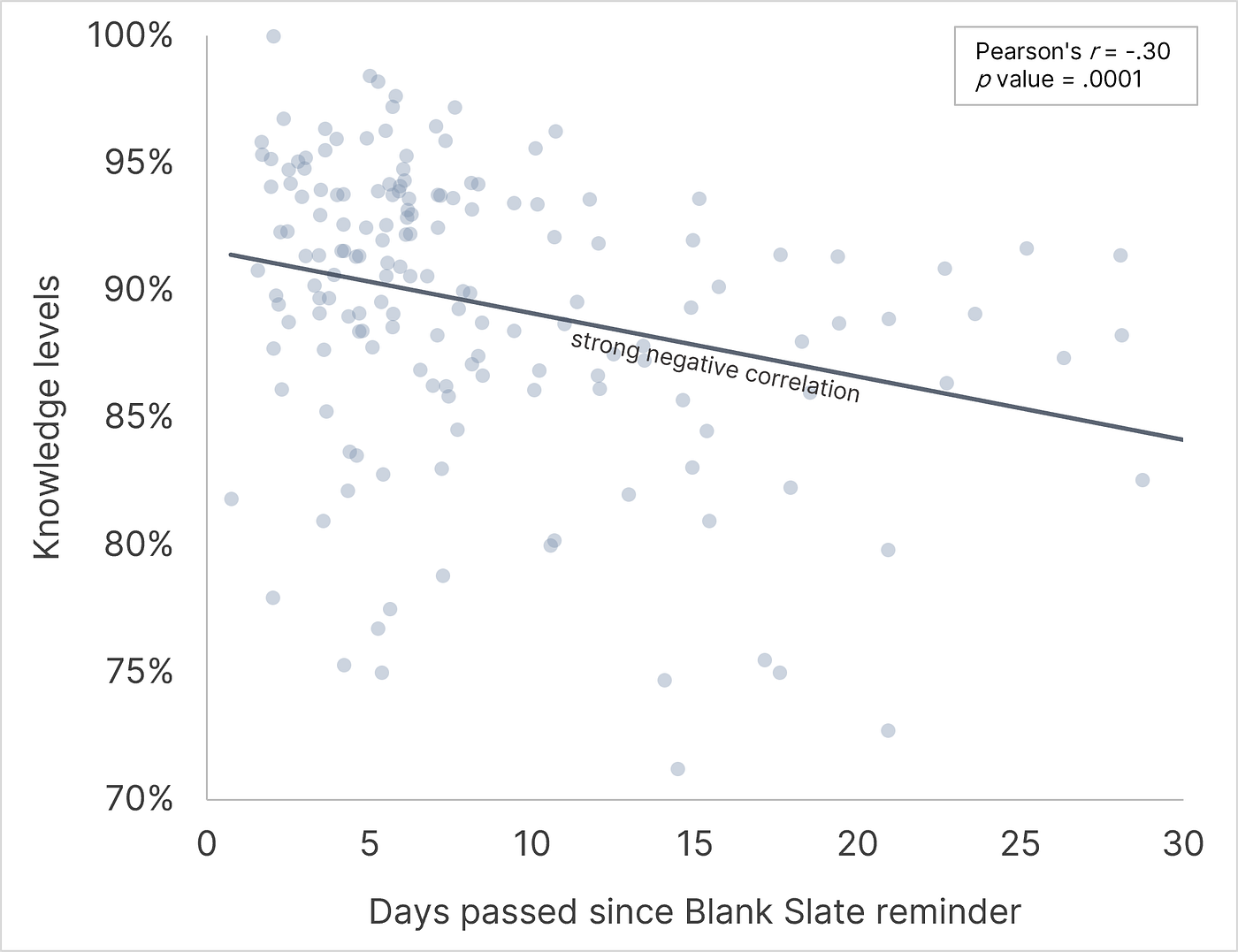
Also shown in the graph, the more often people use Blank Slate, the faster new information sticks. Dartmouth medical students who trained for five short sessions a week mastered the new content much faster than students who used the platform once a week.
And if this was your own team, you could watch this all unfold on Blank Slate’s analytics dashboard. The dashboard allows managers to follow trends like the one in this graph in real time across their entire workforce. So if you ever had any doubt about whether your team was up to speed on the latest safety SOP, you could put that doubt to rest inside Blank Slate’s manager Hub.
Information doesn’t stay still, and neither should training. When every team member has immediate access to the latest information and the training rhythm to retain it, people can — and do! — operate at maximum safety and proficiency.
____
Amy Smith, PhD
Chief Scientific Officer, Blank Slate Technologies