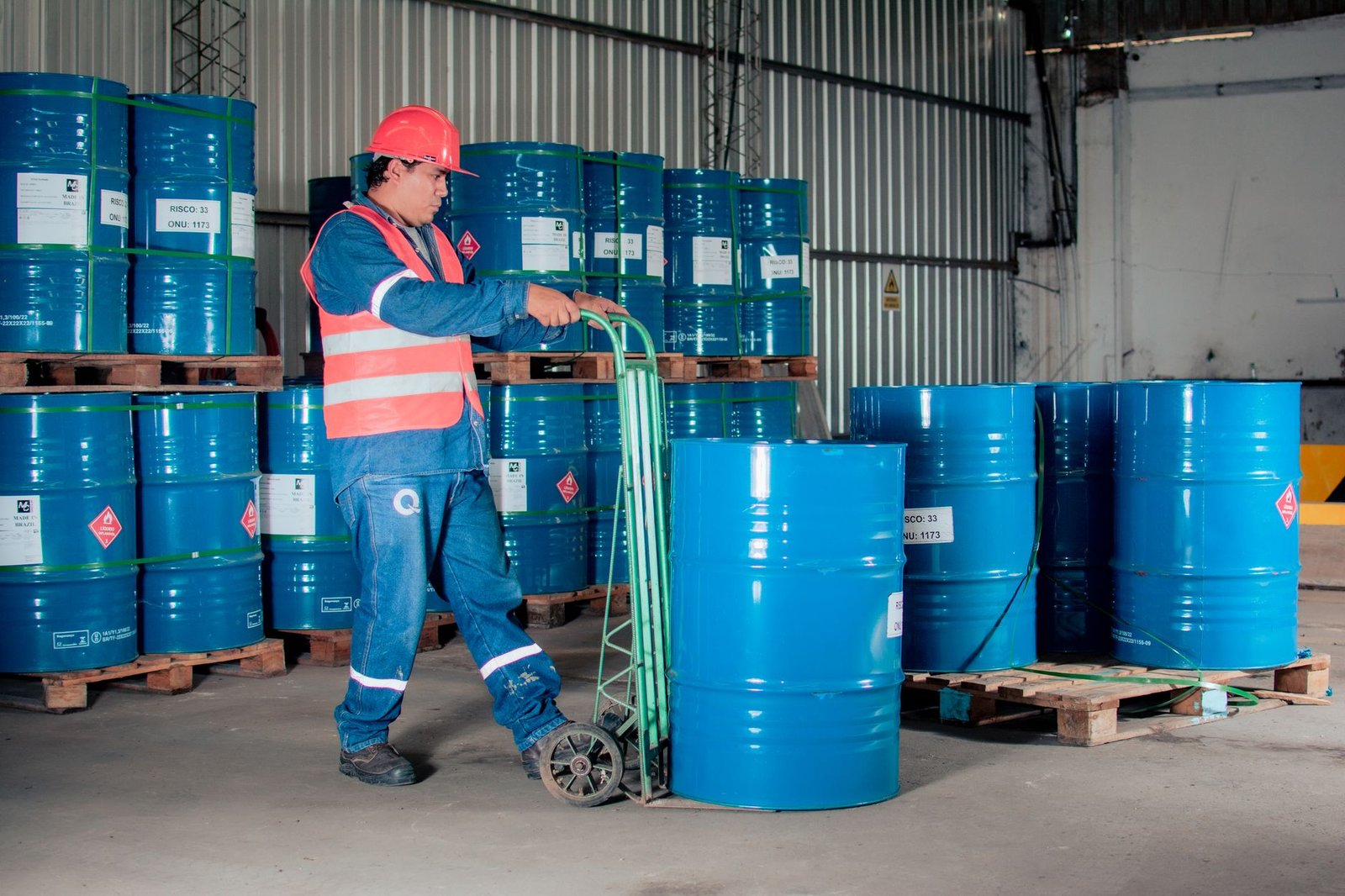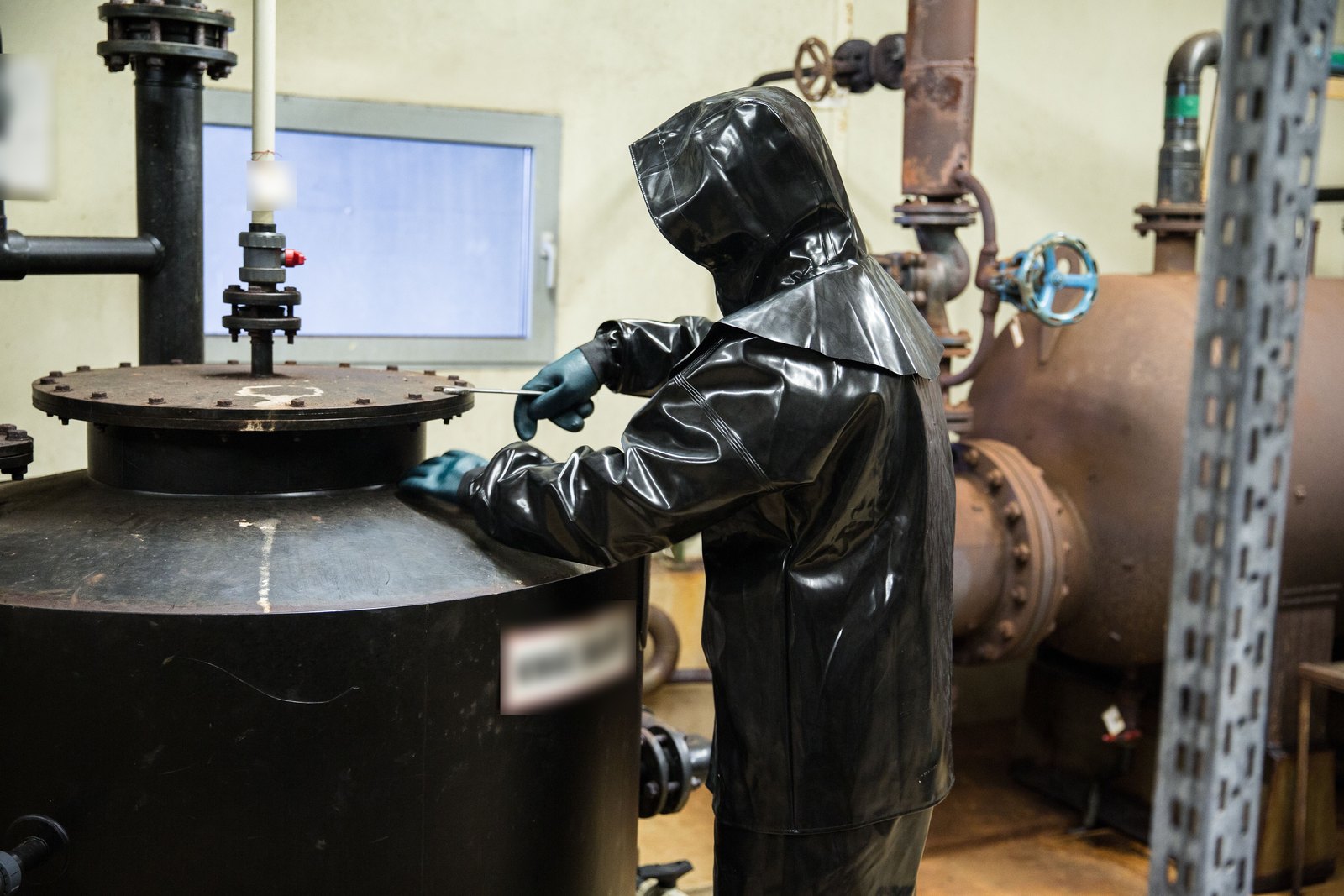
Every permit-required confined space entry depends on three people doing their jobs at once. The entrant works inside, the attendant watches from outside, and the entry supervisor decides whether anyone goes in at all. Confined space training is how an employer makes sure each of them knows that job before the cover comes off.
OSHA's rule does not set a course length. It requires proficiency, and it requires retraining when the employer has reason to believe someone's knowledge has slipped. For an EHS manager, that second requirement is the hard one to prove.
Table of Contents
- Who needs confined space training
- Confined space training requirements under 1910.146(g)
- What each role must know
- Does confined space training expire?
- Can confined space training be done online?
- Keeping crews ready between sessions
- What this means for EHS leaders
- Frequently Asked Questions
Who Needs Confined Space Training
In general industry, the rule is 29 CFR 1910.146, Permit-Required Confined Spaces. Under paragraph (b), a confined space is large enough for an employee to bodily enter and work, has limited or restricted means of entry or exit, and is not designed for continuous occupancy. It becomes a permit space when it also has a serious hazard:
- a hazardous atmosphere, actual or potential
- material that could engulf an entrant
- a shape that could trap or asphyxiate someone, such as inwardly converging walls
- any other recognized serious safety or health hazard
Paragraph (g)(1) covers "all employees whose work is regulated by this section" and not only the person climbing in.
Three scope limits matter when you build a program:
- Construction, agriculture and shipyards are outside 1910.146. Paragraph (a) excludes them. Construction work falls under 29 CFR 1926 Subpart AA, whose training rule (1926.1207) runs in parallel and adds that training must be given in a language and vocabulary the employee can understand.
- Alternate procedures change the role list. When the only hazard is an atmosphere that continuous forced-air ventilation keeps safe, paragraph (c)(5) lets the employer skip paragraphs (d) through (f) and (h) through (k). Those include the entrant, attendant and supervisor duty paragraphs.
- One person can hold two roles. The rule allows an entry supervisor to also serve as attendant or entrant, if that person is trained and equipped for each role.
Confined Space Training Requirements Under 1910.146(g)
Paragraph (g) is the core of confined space safety training. It says what training must achieve and when it must happen, but not how many hours it takes.
What training must achieve. Under (g)(1), employees must acquire "the understanding, knowledge, and skills necessary for the safe performance" of their assigned duties. Under (g)(3), "The training shall establish employee proficiency in the duties required by this section." It must also introduce new or revised procedures as needed.
When training is required. Paragraph (g)(2) lists four triggers:
| Trigger | Paragraph |
|---|---|
| Before the employee is first assigned permit space duties | (g)(2)(i) |
| Before a change in assigned duties | (g)(2)(ii) |
| When a change in permit space operations creates a hazard the employee has not been trained on | (g)(2)(iii) |
| When the employer has reason to believe there are deviations from entry procedures, or inadequacies in the employee's knowledge or use of them | (g)(2)(iv) |
How it is documented. Paragraph (g)(4) requires the employer to certify the training. "The certification shall contain each employee's name, the signatures or initials of the trainers, and the dates of training." It must be available for inspection by employees and their authorized representatives. OSHA's booklet on the standard, Permit-Required Confined Spaces (OSHA 3138, 2004), summarizes the same rules for employers.
What Each Role Must Know
Confined space entry training requirements differ by role because duties differ. Paragraphs (h), (i) and (j) list them, and each list opens with the same item: know the hazards, including the signs, symptoms and consequences of exposure.
| Role | Core duties under 1910.146 |
|---|---|
| Authorized entrant | Use equipment properly, stay in contact with the attendant, alert the attendant to warning signs, exit quickly when ordered or when danger appears |
| Attendant | Stay outside, keep an accurate count of entrants, monitor inside and outside, order evacuation, summon rescue, do nothing that interferes with monitoring |
| Entry supervisor | Verify tests, procedures and equipment before signing the permit, terminate entry and cancel the permit, verify rescue is available, remove unauthorized people |
Authorized entrants
Under paragraph (h), entrants must know the hazards they may face and use the required equipment correctly. They must also communicate with and alert the attendant to warning signs or a prohibited condition. When told to evacuate, or when they notice danger themselves, they must exit "as quickly as possible."
Attendants
Paragraph (i) requires the attendant to remain outside the space until relieved and to continuously maintain "an accurate count of authorized entrants in the permit space." The attendant orders evacuation when conditions change and summons rescue when entrants may need help to escape.
A 1986 NIOSH alert on preventing deaths in confined spaces reported that "More than 60% of confined space fatalities occur among would-be rescuers." An attendant who remembers the hazard but forgets the rule against going in becomes the second victim.
Entry supervisors
Confined space supervisor training covers paragraph (j). The supervisor confirms tests and equipment before endorsing the permit and terminates the entry when required. The supervisor also "Verifies that rescue services are available and that the means for summoning them are operable," and, whenever responsibility for an entry transfers, confirms the entry still matches the permit. Isolating the permit space under (d)(3)(iii) can include lockout or tagout, which lockout tagout training covers.
Rescue team members carry separate duties under paragraph (k), including first aid and CPR training and practice rescues at least once every 12 months. That belongs to a confined space rescue plan, outside the entrant, attendant and supervisor training covered here. Many employers rely on an outside service, such as a fire department, evaluated under that plan.
Does Confined Space Training Expire?
Not on a calendar. Unlike the rule for HAZWOPER training, paragraph (g) sets no expiration date and no annual refresher for entrants, attendants or supervisors. Retraining is driven by the (g)(2) triggers. An employer can still set annual confined space refresher training as company policy.
The trigger that matters most is (g)(2)(iv): retrain when you have reason to believe someone's knowledge is inadequate. That only works if you can see knowledge slip before an inspection or an incident shows it.
Research on skill decay shows how fast it slips. A 2025 meta-analysis in Psychological Bulletin pooled "1,344 effect sizes from 457 reports" on procedural skills with motor components. It found that "half of initial skill acquisition performance gains were lost after approximately 6.5 months for accuracy." The skill retention meta-analysis also named intermittent opportunities to practice as a possible moderator of that loss.
Confined space work is often infrequent. If a crew enters a given tank twice a year, by the second entry the training certificate is still on file, and much of what it represents may have faded.
Can Confined Space Training Be Done Online?
Paragraph (g) does not name a delivery method. It names an outcome: proficiency in the duties of each role. Confined space training online can cover hazard recognition, permit contents and the rules each role follows. It cannot by itself show that an attendant can run a headcount, use the communication system and order an evacuation under pressure.
A meta-analysis of 95 studies with 20,991 participants, published in the American Journal of Public Health, found that as methods became more engaging, workers showed "greater knowledge acquisition" (Burke et al., 2006). The authors concluded that training with behavioral modeling, practice and dialogue is generally more effective. Their findings "challenge the current emphasis on more passive computer-based and distance training methods."
A practical split for confined space entry training:
- Online or classroom: hazards of your specific spaces, the permit, role duties, communication signals
- Hands-on: gas monitor use, retrieval equipment, attendant headcount and evacuation drills at a representative space
- Between sessions: short recall checks on the knowledge each role must have without looking it up
Keeping Crews Ready Between Sessions
The third item on that list is where Blank Slate fits. Blank Slate is a cognitive-readiness platform built on AI-optimized spaced retrieval. Spaced retrieval combines spaced repetition (reviewing material over time) with retrieval practice (answering from memory instead of rereading).
For a confined space program, the questions come from your own permit space program and role duties. Entrants, attendants and supervisors answer questions in short sessions (about 60 seconds), 3-4 times a week, adding up to a few minutes a week. Each answer is a data point. The result is a view of what each role and crew knows now, which is the evidence (g)(2)(iv) asks you to act on.
Blank Slate has no published confined space study, so the evidence comes from other high-stakes teams. In a study of US Air Force pararescue trainees presented at I/ITSEC 2023, Blank Slate users rose from 67% to 81% accuracy over 16 weeks. They averaged about 100 seconds of use per week.
In the same study, app users had an 84% first-time pass rate on an applied knowledge test, versus 46% for non-users (I/ITSEC 2023). That is an association, not proof of cause. The USAF Pararescue case study has the details.
A randomized controlled trial with university students speaks to the time cost. Blank Slate's spaced retrieval matched daily review's retention in about one-third of the study time (McHugh et al., 2021).
Blank Slate does not deliver the training 1910.146 requires. It does not replace the course, hands-on practice, rescue practice or the (g)(4) certification. It coexists with your LMS: the LMS records who completed training, and Blank Slate shows what they still know (see the difference). The how it works page shows the setup, and the industrial safety page covers EHS teams.
What This Means for EHS Leaders
A certification file answers one question: was this person trained, by whom, and when. It does not answer whether tonight's attendant would order an evacuation or stay out of the space when a coworker collapses. Paragraph (g)(2)(iv) makes that second question the employer's to answer.
That turns retraining into a measurement decision: retrain everyone on a fixed date, or retrain the roles and crews whose knowledge has measurably slipped. Only the second rests on evidence of who needs it.
Our piece on tracking employee training covers why completion records alone fall short. A Knowledge Gap Audit shows where your entrants, attendants and supervisors stand today.
Frequently Asked Questions
How often is confined space refresher training required?
OSHA's general industry rule sets no fixed refresher interval for entrants, attendants or supervisors. Under 1910.146(g)(2), retraining is required before new or changed duties and after operational changes that present a hazard the employee was not trained on. It is also required whenever the employer has reason to believe knowledge or procedure use is inadequate.
What training does a confined space attendant need?
An attendant needs training to proficiency in the duties in 1910.146(i). Those include knowing the hazards and exposure symptoms, staying outside the space, keeping an accurate count of entrants, ordering evacuation and summoning rescue. The attendant must not take on duties that interfere with monitoring entrants.
Who needs confined space supervisor training?
Anyone who authorizes and oversees permit space entry, such as a foreman or crew chief, needs training in the duties in 1910.146(j). A supervisor who also acts as attendant or entrant must be trained and equipped for each role they fill.
Can confined space entry training be done online?
Online instruction can cover hazards, permits and role duties, but 1910.146(g)(3) requires training to establish proficiency. Skills such as gas monitoring, retrieval equipment and evacuation drills need hands-on practice. Research on safety training finds more engaging, practice-based methods produce greater knowledge gains.
Your crews hold confined space certifications. A Knowledge Gap Audit shows what your entrants, attendants and supervisors still know today and where to focus first, so retraining goes where knowledge has slipped.