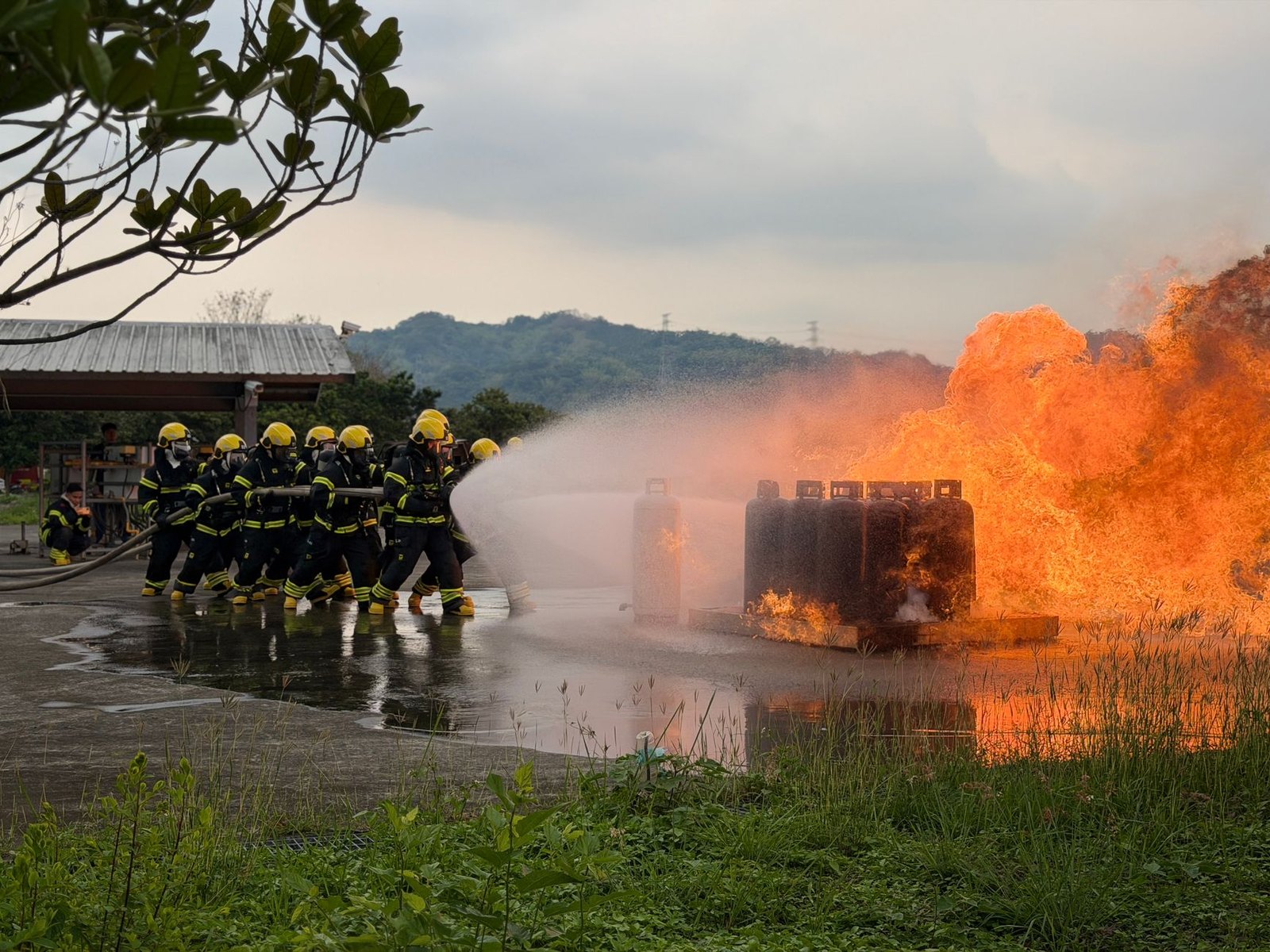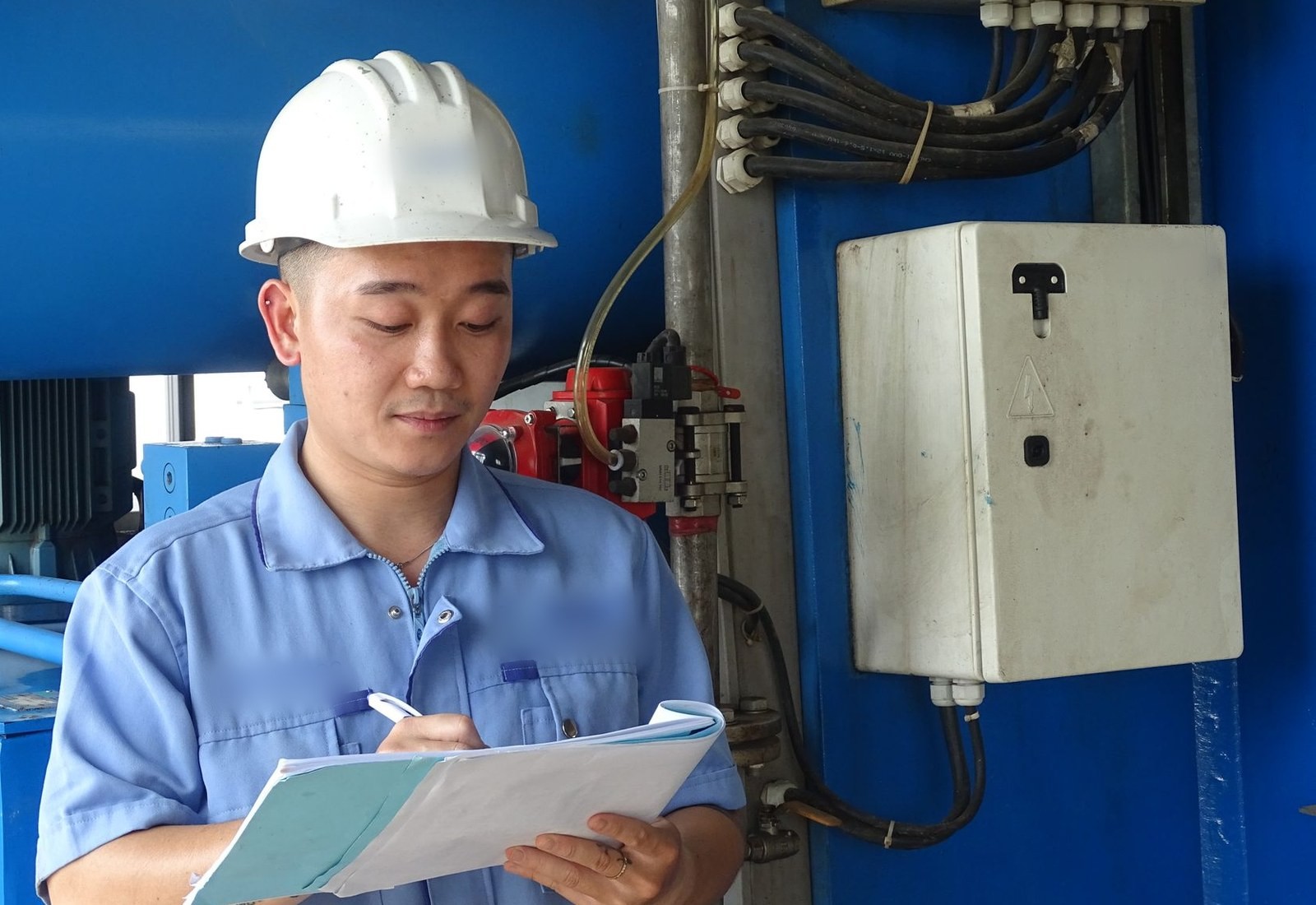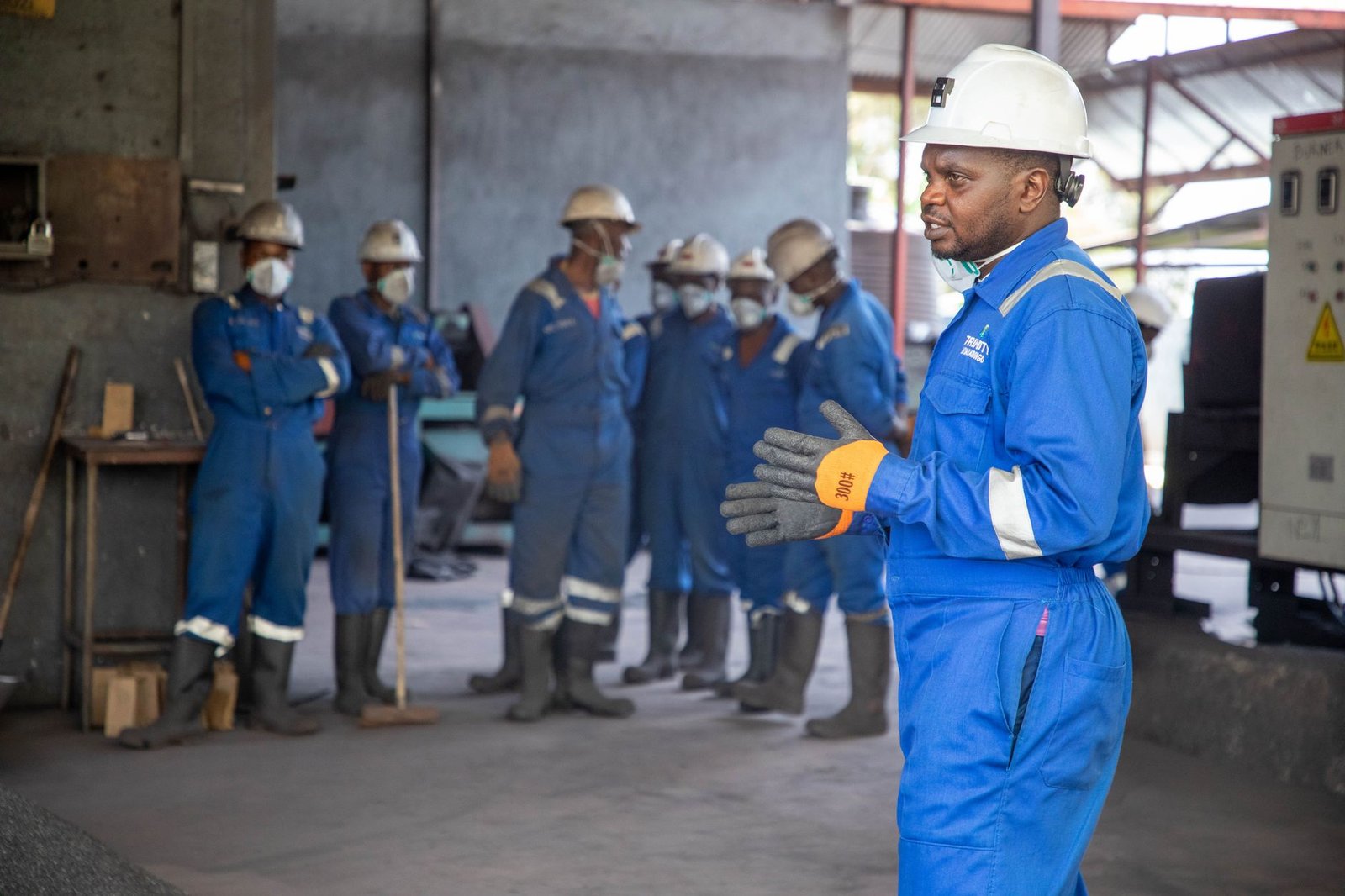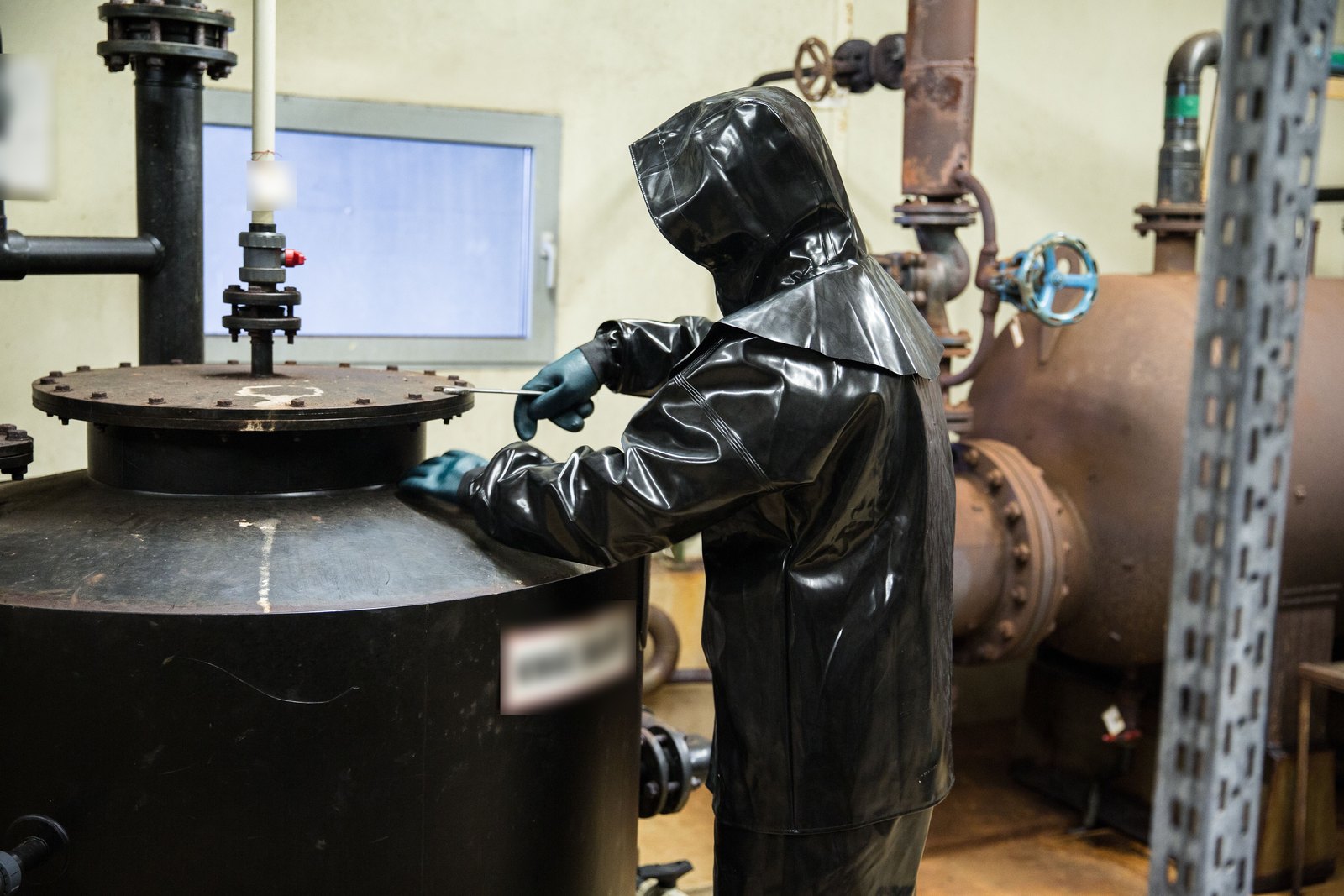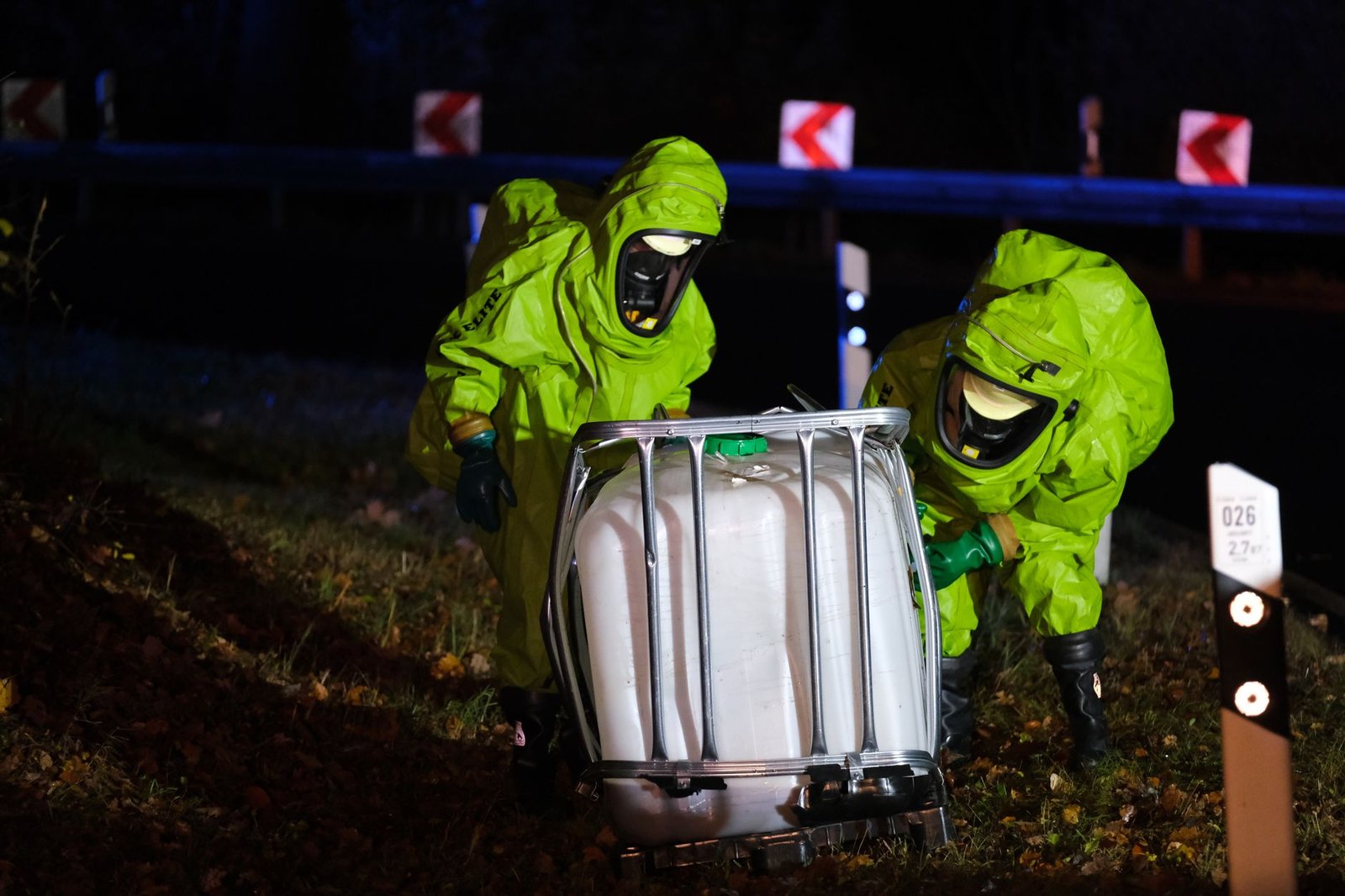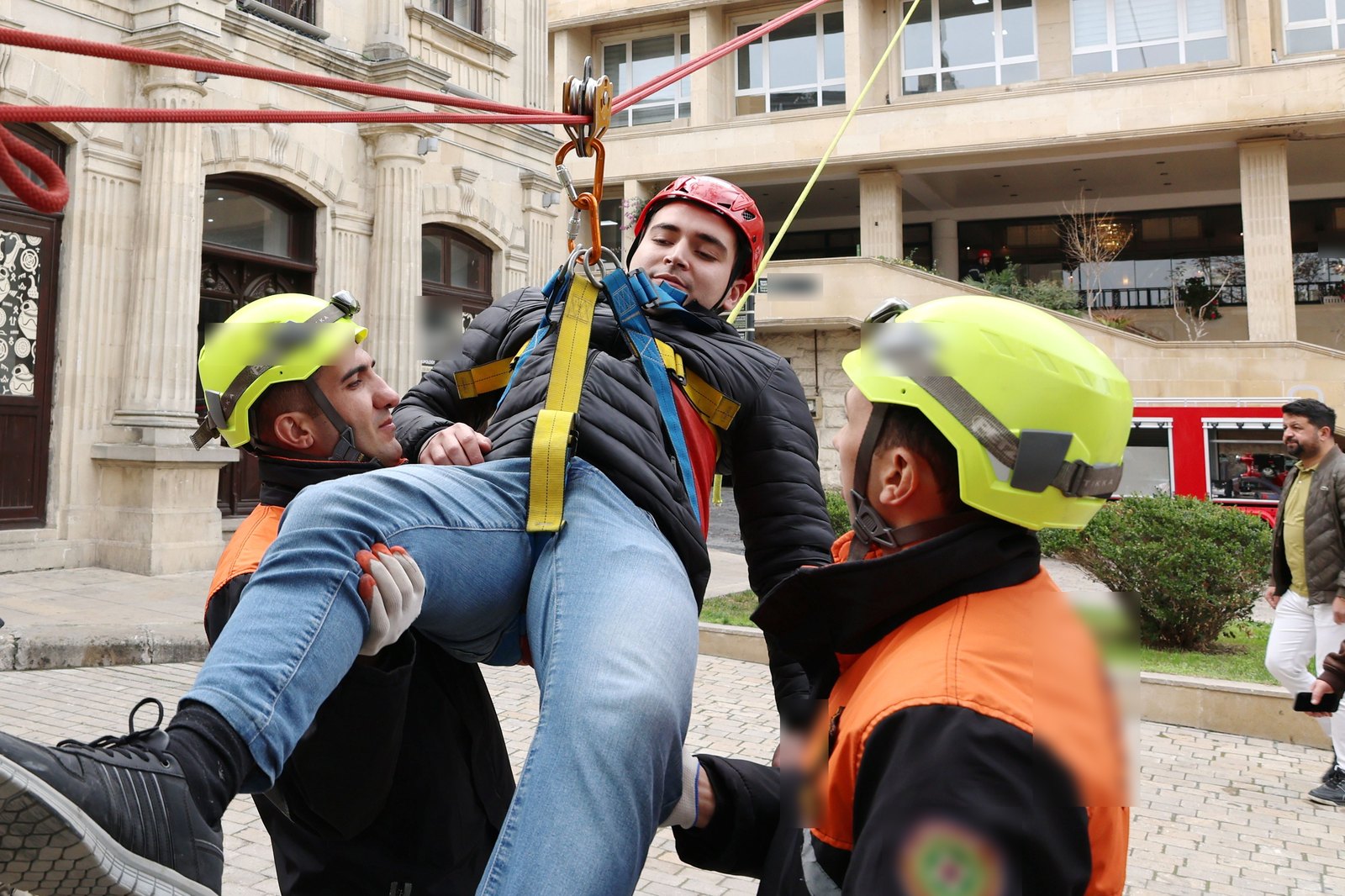
When an entrant collapses inside a tank, the next few minutes depend on choices made weeks earlier: who comes, how fast, and whether they have practiced in a space like this one. A confined space rescue plan is where those choices are written down.
OSHA's permit space rule spells out what that plan must settle. A phone number on the permit does not.
Table of Contents
- What a confined space rescue plan has to cover
- Why 911 is not a rescue plan
- Evaluating and selecting a rescue service
- In-house rescue team or outside service
- Confined space rescue training under (k)(2)
- Non-entry rescue and retrieval systems
- A confined space rescue plan template
- Keeping a rescue team ready between practices
- What this means for EHS leaders
- Frequently Asked Questions
What a Confined Space Rescue Plan Has to Cover
In general industry, the rule is 29 CFR 1910.146, Permit-Required Confined Spaces. Paragraph (d)(9) makes rescue part of the written permit space program. The employer must develop and implement procedures:
- for summoning rescue and emergency services
- for rescuing entrants from permit spaces
- for providing necessary emergency services to rescued employees
- for preventing unauthorized personnel from attempting a rescue
Paragraph (k) covers choosing a service (k)(1), training in-house rescuers (k)(2) and retrieval systems (k)(3). Three scope limits come first:
- Paragraph (a) excludes agriculture, construction and shipyard employment. Construction confined spaces generally fall under 29 CFR 1926 Subpart AA, which has its own rescue provision (1926.1211) and has a competent person identify confined spaces before work begins.
- Alternate procedures remove paragraph (k). Where the employer can demonstrate, with documented monitoring and inspection data, that the only hazard is an atmosphere continuous forced-air ventilation alone keeps safe, (c)(5) lets it skip paragraphs (d) through (f) and (h) through (k).
- Entry roles are separate. Entrant, attendant and entry supervisor training and duties, (g) through (j), are covered in confined space training. The plan meets them where the attendant summons rescue and the supervisor verifies it is available.
Why 911 Is Not a Rescue Plan
Appendix F to 1910.146, OSHA's non-mandatory guide to evaluating rescuers, is direct: "Merely posting the service's number or planning to rely on the 911 emergency phone number to obtain these services at the time of a permit space emergency would not comply with paragraph (k)(1) of the standard."
An outside service can still qualify: Appendix F says the employer must at a minimum contact it to plan and coordinate the evaluations.
A 2012 study in the Journal of Occupational and Environmental Hygiene shows why, combining federal fatality data, a survey of 21 large companies and senior fire officers' estimates. "Twelve (57%) of 21 surveyed companies reported that they relied on the fire department" for permit space emergency response (Wilson, Madison and Healy, 2012).
Arrival was quick: "Median fire department arrival times were about 5 min for engines and 7 min for technical rescue units." The full rescue was not.
Fire officers estimated rescue times of 48 to 123 minutes, or 70 to 173 with hazardous materials. The authors concluded that "fire departments usually are not able to effect a confined space rescue in a timely manner" in a life-threatening emergency. They proposed that fire departments support "a properly trained and equipped on-site rescue team."
Evaluating and Selecting a Rescue Service
Paragraph (k)(1) sets five duties for every employer that designates rescue services under (d)(9):
- Evaluate whether a prospective rescuer can respond in a timely manner, given the hazards.
- Evaluate the service's proficiency with rescue tasks and equipment.
- Select one that can reach the victim in a time appropriate to the hazards and is "equipped for and proficient in performing the needed rescue services."
- Inform the team or service of the hazards they may confront.
- Give them access to all permit spaces from which rescue may be necessary, so they can plan and practice.
Timely depends on the space. Appendix F counts response time from notification to being set up and ready for entry. For an IDLH atmosphere, or a space that can quickly develop one, the team or service would need to stand by at the space. Where the danger is limited to mechanical hazards causing injuries such as broken bones, "a response time of 10 or 15 minutes might be adequate."
Appendix F also has employers measure the team's performance "during an actual or practice rescue." A critique follows.
In-House Rescue Team or Outside Service
Both are allowed.
| Question | In-house rescue team | Outside rescue service |
|---|---|---|
| Who trains the rescuers | The employer, under (k)(2) | The service; Appendix F asks whether it meets (k)(2) |
| Response time | Can stand by at the space | Depends on distance; Appendix F asks what happens if it becomes unavailable mid-entry |
| Knowledge of your spaces | Built through practice in your spaces | Needs hazard briefings and site access under (k)(1)(iv)-(v) |
Confined Space Rescue Training Under (k)(2)
When the employer's own employees are designated rescuers, (k)(2) requires the employer to:
- Provide PPE and training in it. Rescuers get the PPE they need and are trained "so they are proficient in the use of that PPE, at no cost to those employees."
- Train rescue duties and entrant proficiency. Rescuers learn their assigned rescue duties and must "successfully complete the training required to establish proficiency as an authorized entrant."
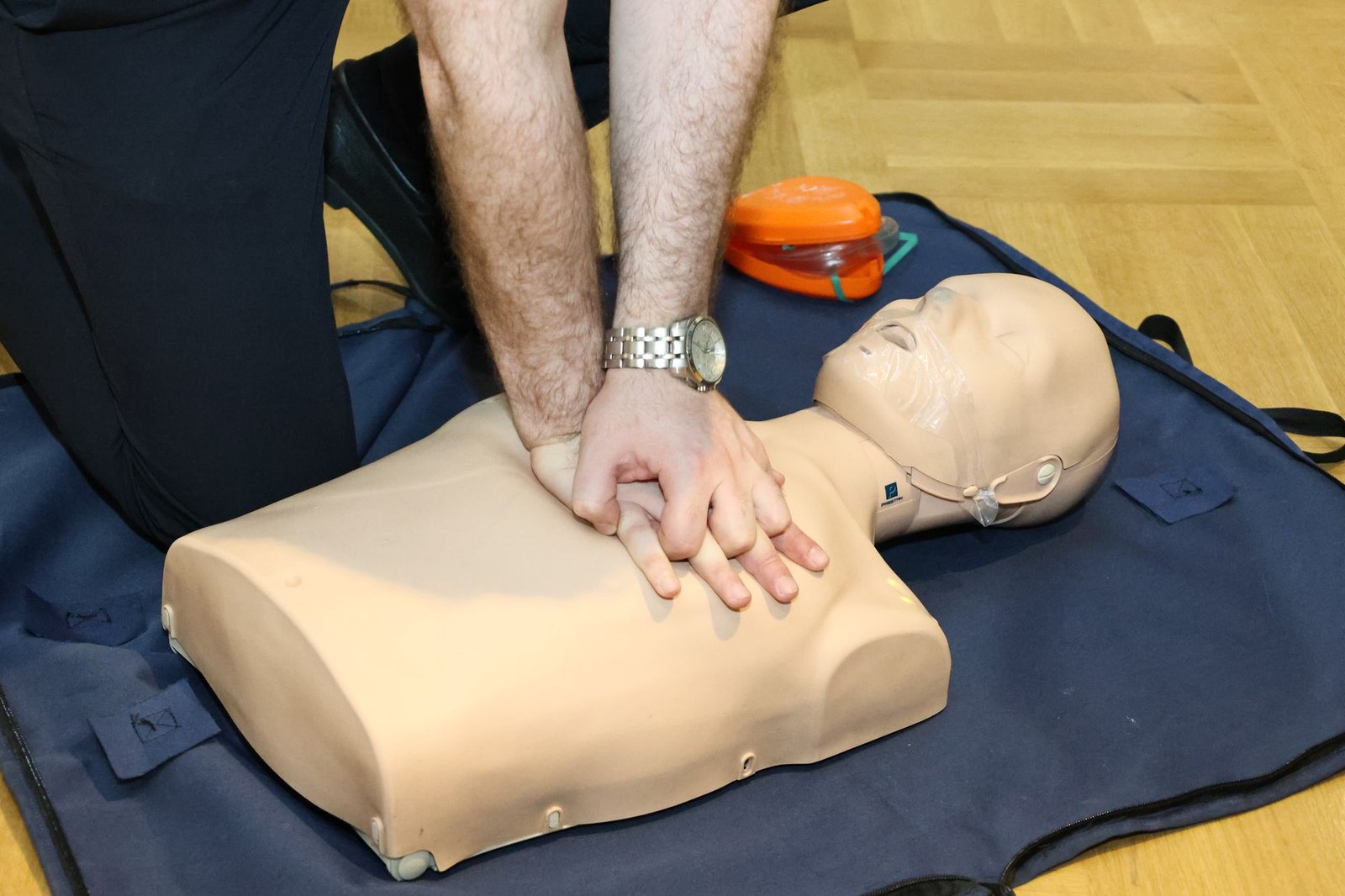
- Train first aid and CPR. All affected employees are trained in basic first aid and CPR, and the employer ensures "at least one member of the rescue team or service holding a current certification in first aid and CPR is available."
- Hold practice rescues at least once every 12 months. These are simulated rescues that "remove dummies, manikins, or actual persons from the actual permit spaces or from representative permit spaces."
Representative spaces must simulate the opening size, configuration and accessibility of the real ones. Appendix F reads the annual practice as applying "provided that the team or service has not successfully performed a permit space rescue within that time."
Non-Entry Rescue and Retrieval Systems
Paragraph (k)(3) requires retrieval systems or methods whenever an authorized entrant enters a permit space. The exception: "unless the retrieval equipment would increase the overall risk of entry or would not contribute to the rescue of the entrant."
- Each entrant wears a chest or full body harness with the retrieval line attached.
- Wristlets may replace the harness only if the employer can demonstrate a harness "is infeasible or creates a greater hazard" and that wristlets are the safest and most effective alternative.
- The other end of the line attaches to a mechanical device or fixed point outside the space, so rescue can begin as soon as the need for it is known.
- A mechanical device must be available for vertical permit spaces more than 5 feet (1.52 m) deep.
Under (k)(4), if an injured entrant was exposed to a substance with an MSDS or similar written information required at the worksite, it goes to the treating medical facility.
A Confined Space Rescue Plan Template
OSHA does not publish a rescue plan form. This template is the article's own summary of (d)(9), (k) and Appendix F. Fill in one copy per permit space, or per group of spaces with the same hazards and configuration.
| Plan element | What to record for this space | Basis |
|---|---|---|
| Hazards and response time | The space's hazards, the response time they allow, and whether standby is needed | (k)(1)(i), Appendix F |
| Rescue team or service | Who is designated, when they were evaluated, and how they are summoned | (d)(9), (k)(1) |
| Hazard briefing and access | When the team was told the hazards and given access to the space | (k)(1)(iv)-(v) |
| Training records | PPE proficiency, rescue duties, entrant proficiency, first aid and CPR | (k)(2)(i)-(iii) |
| Practice | Date and type of the last practice rescue and its critique | (k)(2)(iv), Appendix F |
| Retrieval system | Harness, line, anchor point or device, or the reason retrieval is not used | (k)(3) |
| Medical information | Which MSDS or written information goes with an injured entrant | (k)(4) |
| Unauthorized rescue | How the crew prevents would-be rescuers from entering | (d)(9) |
Review it when a space, its hazards or the rescue arrangement changes.
Keeping a Rescue Team Ready Between Practices
An annual practice tests the team once. The knowledge behind it has to hold the rest of the year: each space's hazards, the rescue plan, the retrieval rules and the entrant-level knowledge (k)(2)(ii) requires.
Blank Slate is a cognitive-readiness platform built on AI-optimized spaced retrieval. Spaced retrieval combines spaced repetition (reviewing material over time) with retrieval practice (answering from memory instead of rereading). It works on top of the training content you already have.
Rescuers answer questions in short sessions (about 60 seconds), 3-4 times a week, adding up to a few minutes a week. Each answer feeds True Knowledge Level™, Blank Slate's real-time readiness metric, which shows what a person or team knows now.
Blank Slate has no published confined space study. The closest evidence is a study of US Air Force pararescue trainees presented at I/ITSEC 2023.
Blank Slate users' accuracy on the course knowledge in the app rose from 67% to 81% over 16 weeks, on about 100 seconds of use per week. App users also had an 84% first-time pass rate on an applied knowledge test, versus 46% for non-users (I/ITSEC 2023). That is an association, not proof of cause. The USAF Pararescue case study has the details.
Blank Slate does not deliver the training 1910.146 requires. It does not replace rescue training, first aid and CPR certification, PPE proficiency or practice rescues. It coexists with your LMS, which records who was trained (see the difference). The industrial safety page covers EHS teams.
What This Means for EHS Leaders
An employer that has never asked its service how long a rescue in a specific tank would take has not met (k)(1), whatever the permit says.
For each permit space, either the evaluated service meets the response time its hazards allow, or the employer needs a team at the space. That team's readiness between practices is the employer's to show, and a Knowledge Gap Audit shows where it stands today.
Frequently Asked Questions
Can 911 be our confined space rescue plan?
No. OSHA's Appendix F to 1910.146 says merely posting a service's number or planning to rely on 911 would not comply with (k)(1). An outside service is allowed once the employer evaluates it and meets the rest of that paragraph.
How often must a confined space rescue team practice?
At least once every 12 months, under 1910.146(k)(2)(iv), using simulated rescues in actual or representative spaces. OSHA's non-mandatory Appendix F reads the requirement as not applying when the team has successfully performed a permit space rescue within that time.
Do confined space rescuers need first aid and CPR certification?
Every in-house rescuer must be trained in basic first aid and CPR under 1910.146(k)(2)(iii). Certification is narrower: at least one member of the rescue team or service holding current certification must be available.
When is a retrieval system not required for confined space entry?
Only when, under 1910.146(k)(3), the equipment would increase the overall risk of entry or would not contribute to the rescue. Otherwise every authorized entrant uses one, and vertical spaces over 5 feet deep need a mechanical device available.
A rescue plan is only as ready as the people named in it. A Knowledge Gap Audit shows what your team knows today, where gaps may exist, and where to focus first.