The Bottom Line Up Front
Knowledge from annual training fades rapidly, often leaving teams operating at an academic ‘D’ level of understanding. Consistent, light reinforcement throughout the year can prevent this decline and reduce related risks.
The Details
Memory Decay Post-Training
If you were called on to perform CPR or the Heimlich maneuver right now, could you recall exactly how to do it? If a loved one was experiencing early signs of a stroke, would you be able to recognize the symptoms? Chances are, unless you’ve used that knowledge recently, it’s probably faded. This isn’t a personal failing, it’s how human memory works.
In the late 19th century, psychologist Hermann Ebbinghaus conducted pioneering research on memory, revealing a phenomenon now known as the forgetting curve [1]. His studies showed that we forget new information rapidly after learning it — as much as 50% within an hour — unless we actively reinforce it.
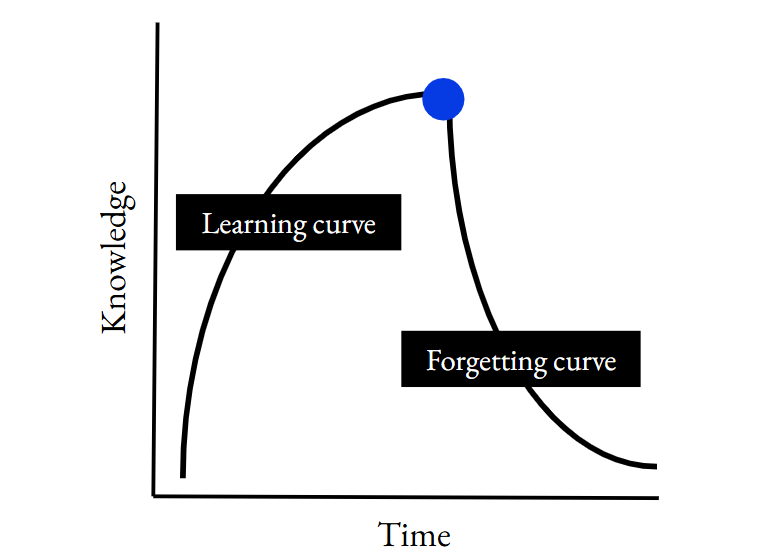
Though this rapid decline is not quite as pronounced for information we’re well-versed in, it’s still remarkable even for critical job-related knowledge.
Consider the results from a study of flight nurses and paramedics at an emergency air transport company [2].
- Before their annual 8-hour emergency training, participants scored 60% on essential protocols that they were expected to recall at 100% accuracy.
- Their scores then rose to 92% immediately after training.
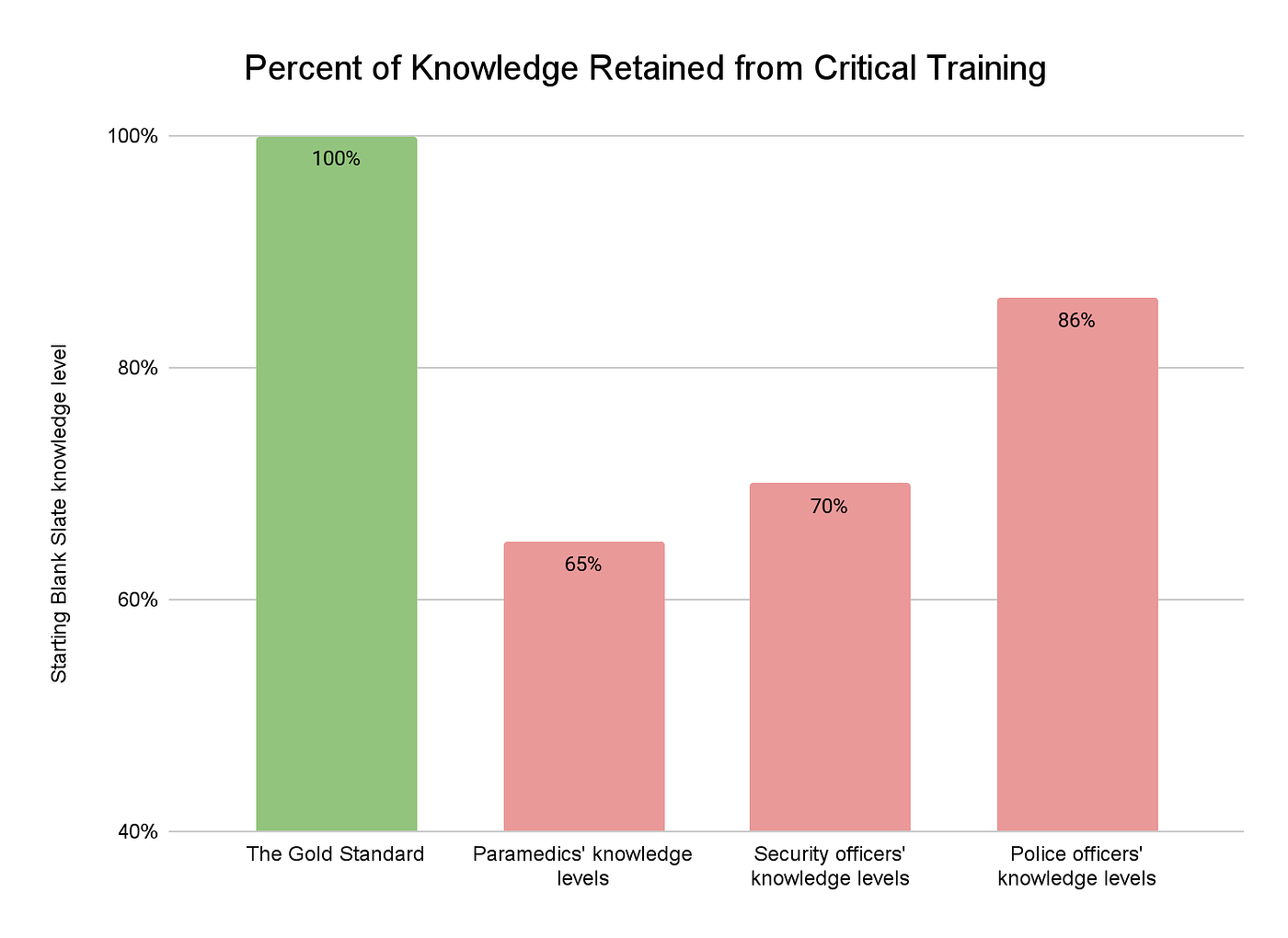
- Six months post-training, scores had dropped from 92% to 65% — an academic D.
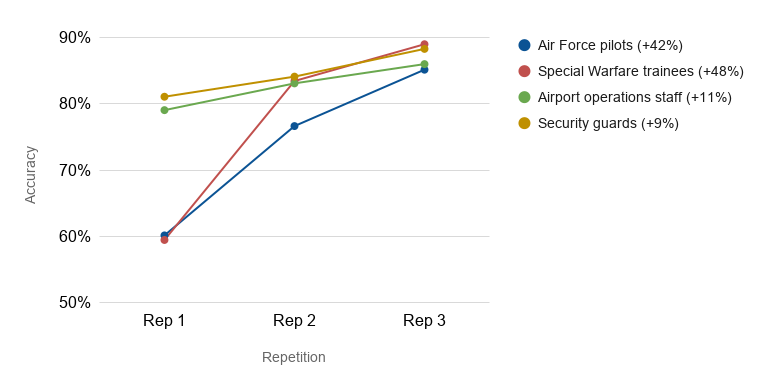
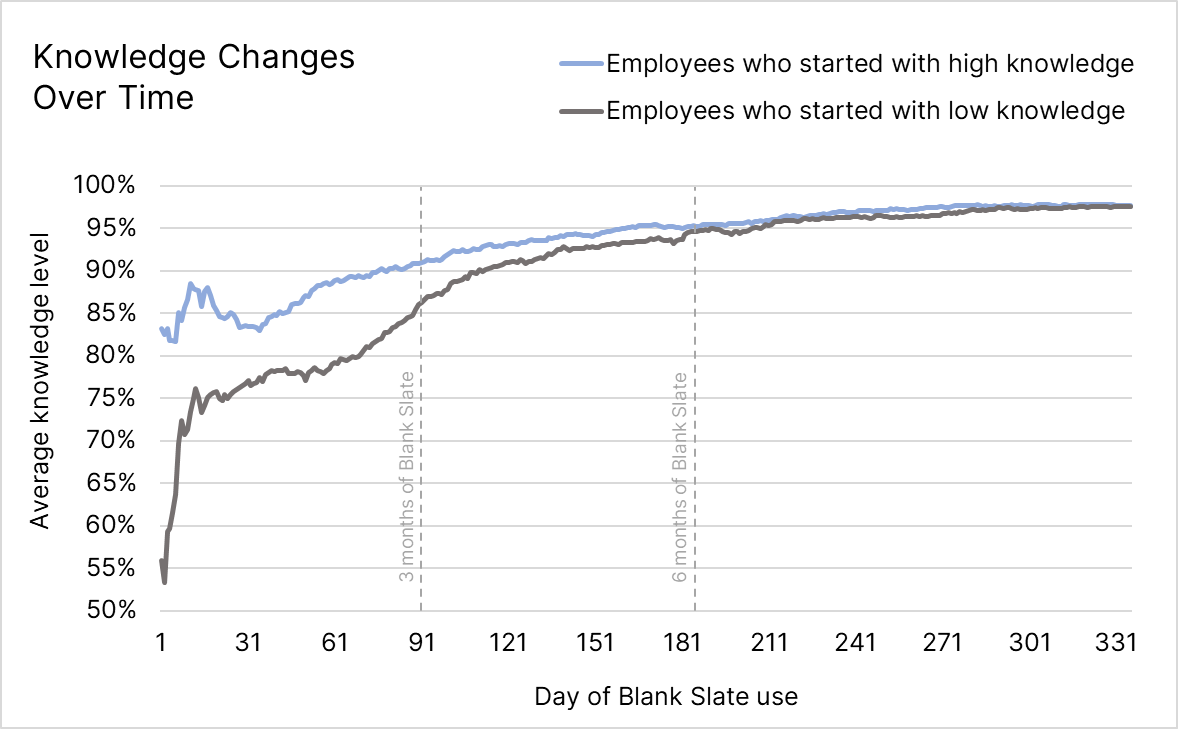
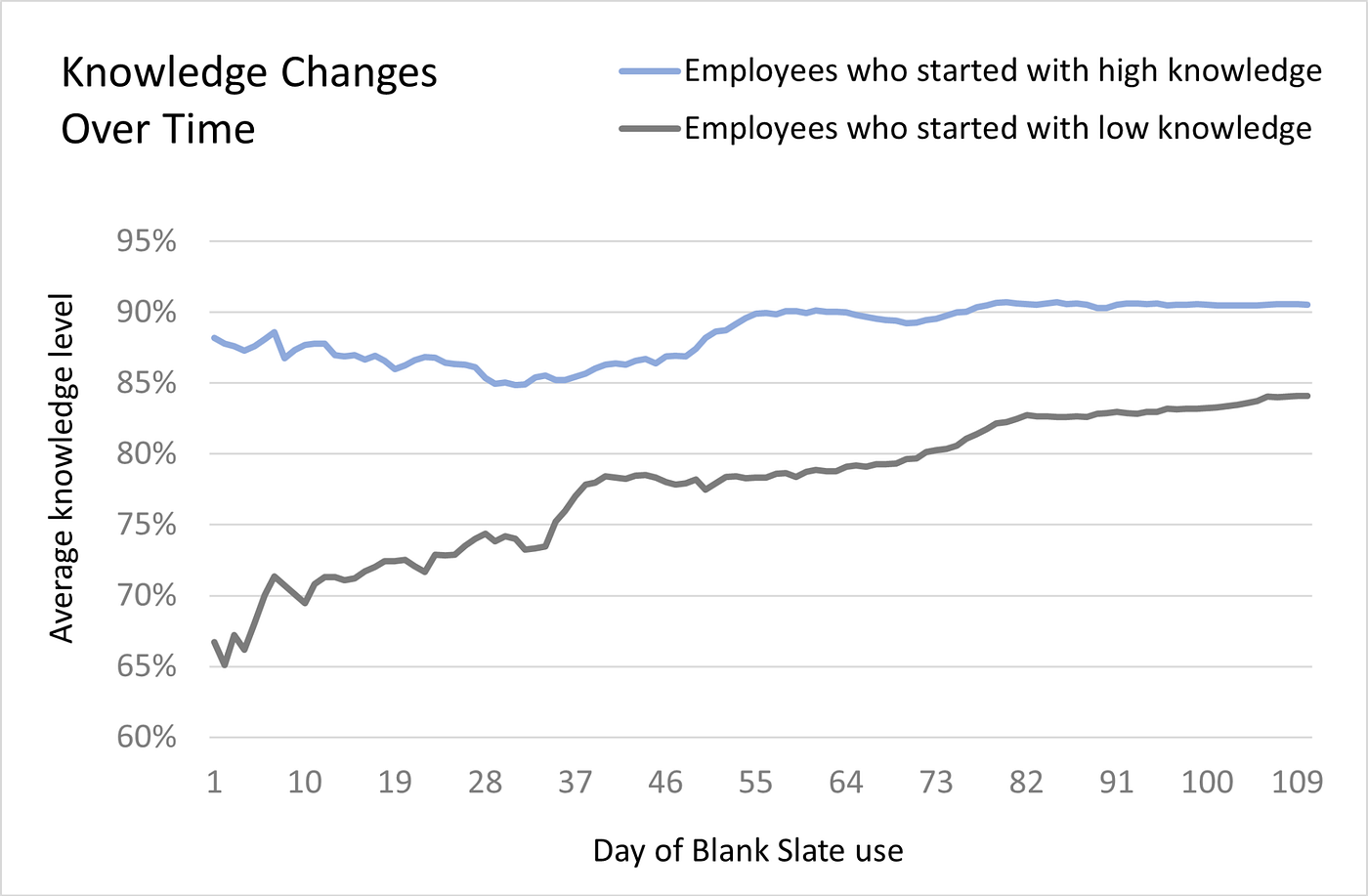
This study isn’t an anomaly. When professionals first begin using Blank Slate to reinforce their training, we consistently detect similar knowledge deficiencies. Below are a few examples of starting knowledge levels from our clients across three distinct job sectors. It’s important to note that employees at each of these organizations were expected to know 100% of this information — yet, understandably, some of it had faded over time.
Memory Decay is Risky Business
In high-stakes environments, even brief memory lapses can have catastrophic outcomes. In one analysis of 1,299 reports from the Aviation Safety Reporting System, researchers identified 75 incidents directly linked to memory errors, such as omitting checklist items [3]. Tragically, two of these incidents resulted in crashes, claiming 308 lives. In both cases, the flight crews neglected to set the wing flaps for takeoff, which is a critical step in the pre-flight checklist.
The healthcare sector exhibits similar vulnerabilities. A study examining 188 adverse surgical events across three hospitals over six months found that 46 incidents were due to memory errors, some of which included momentary lapses or complete omissions of essential training [4]. These errors contributed to 14 patient deaths, highlighting the dire consequences of forgotten procedures in medical settings.
These individual cases reflect a broader trend identified in a 2009 analysis of 90 studies across various industries, including manufacturing, healthcare, defense, and transportation [5]. The analysis concluded that safety knowledge is the strongest predictor of safety performance.
Let me say that again. Safety knowledge is the strongest predictor of safety performance.
In other words, employees with a thorough understanding of safety protocols were more likely to adhere to them, reducing the likelihood of accidents. This factor outweighed others such as risk-taking attitudes, job satisfaction, safety motivation, and supervisory support.
These findings underscore the critical importance of not only providing comprehensive safety training but also ensuring that this knowledge is retained over time. Implementing continuous learning and reinforcement strategies can help mitigate the risks associated with memory decay in safety-critical professions.
Mitigating Risk
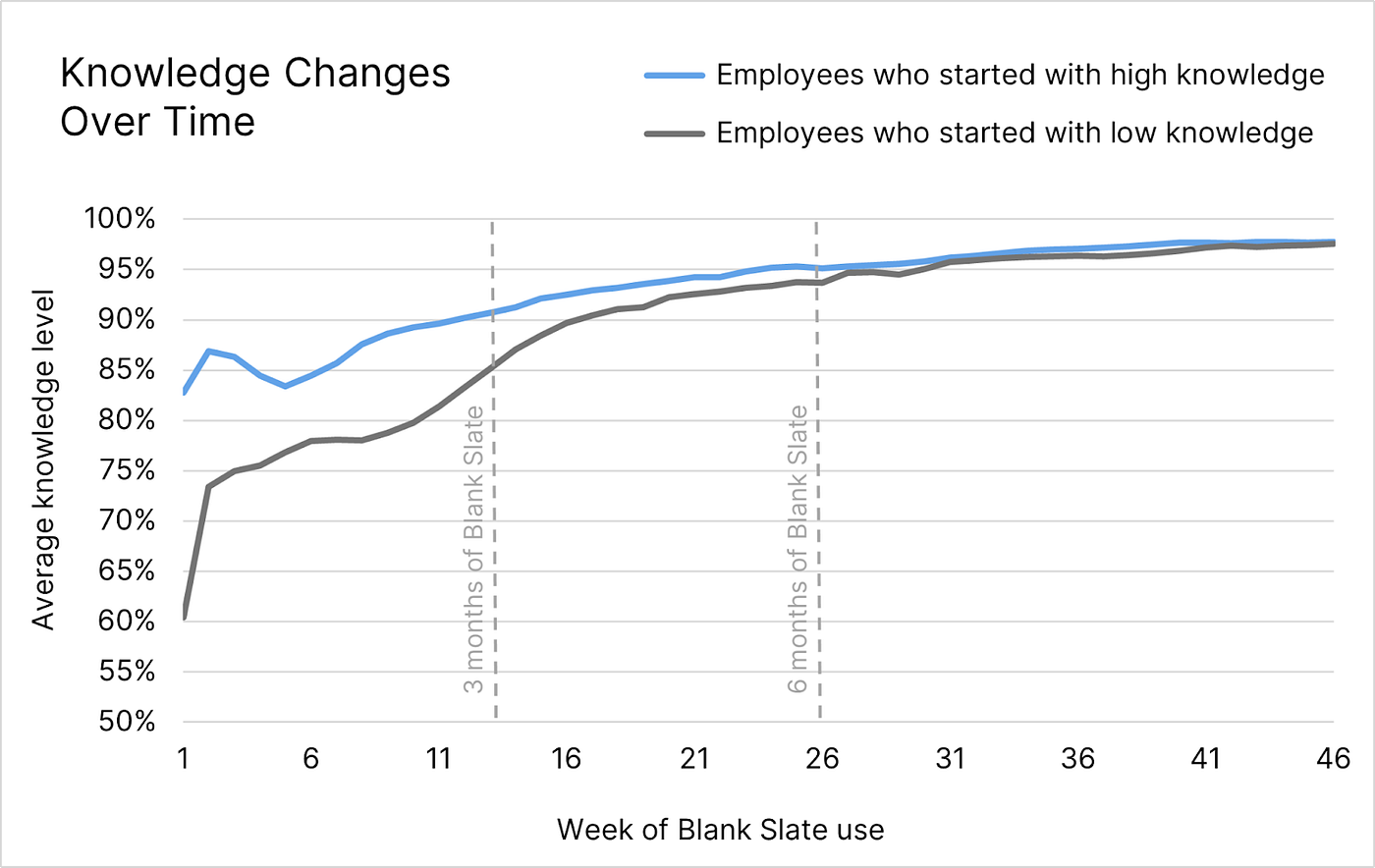
The research is clear: as knowledge proficiency decreases, the risk of workplace accidents increases. Conversely, enhancing employees’ understanding of safety protocols leads to safer work environments. While annual training sessions serve as a foundational step, they often fall short in maintaining high knowledge levels year-round. Implementing continuous learning tools, such as Blank Slate, ensures that knowledge gaps are promptly identified and addressed, fostering a culture of safety and reducing the likelihood of accidents.
References
- Ebbinghaus, H. (1913). Memory: A contribution to experimental psychology (H. A. Ruger & C. E. Bussenius, Trans.). New York: Teachers College, Columbia University. (Original work published 1885)
- Wynn, J. S., & Black, S. (1998). Evaluation of retention of safety and survival training content versus industry standard for training. Air Medical Journal, 17(4), 166–168. https://doi.org/10.1016/S1067-991X(98)90044-X
- Nowinski, J. L., Holbrook, J., & Dismukes, R. K. (2003). Human memory and cockpit operations: An ASRS study. In Proceedings of the 12th International Symposium on Aviation Psychology (pp. 888–893). Dayton, OH: Wright State University.
- Suliburk, J. W., Buck, Q. M., Pirko, C. J., Massarweh, N. N., Barshes, N. R., Singh, H., & Rosengart, T. K. (2019). Analysis of human performance deficiencies associated with surgical adverse events. JAMA Network Open, 2(7), e198067. https://doi.org/10.1001/jamanetworkopen.2019.8067
- Christian, M. S., Bradley, J. C., Wallace, J. C., & Burke, M. J. (2009). Workplace safety: A meta-analysis of the roles of person and situation factors. Journal of Applied Psychology, 94(5), 1103–1127. https://doi.org/10.1037/a0016172
____
Amy Smith, PhD
Chief Scientific Officer, Blank Slate Technologies